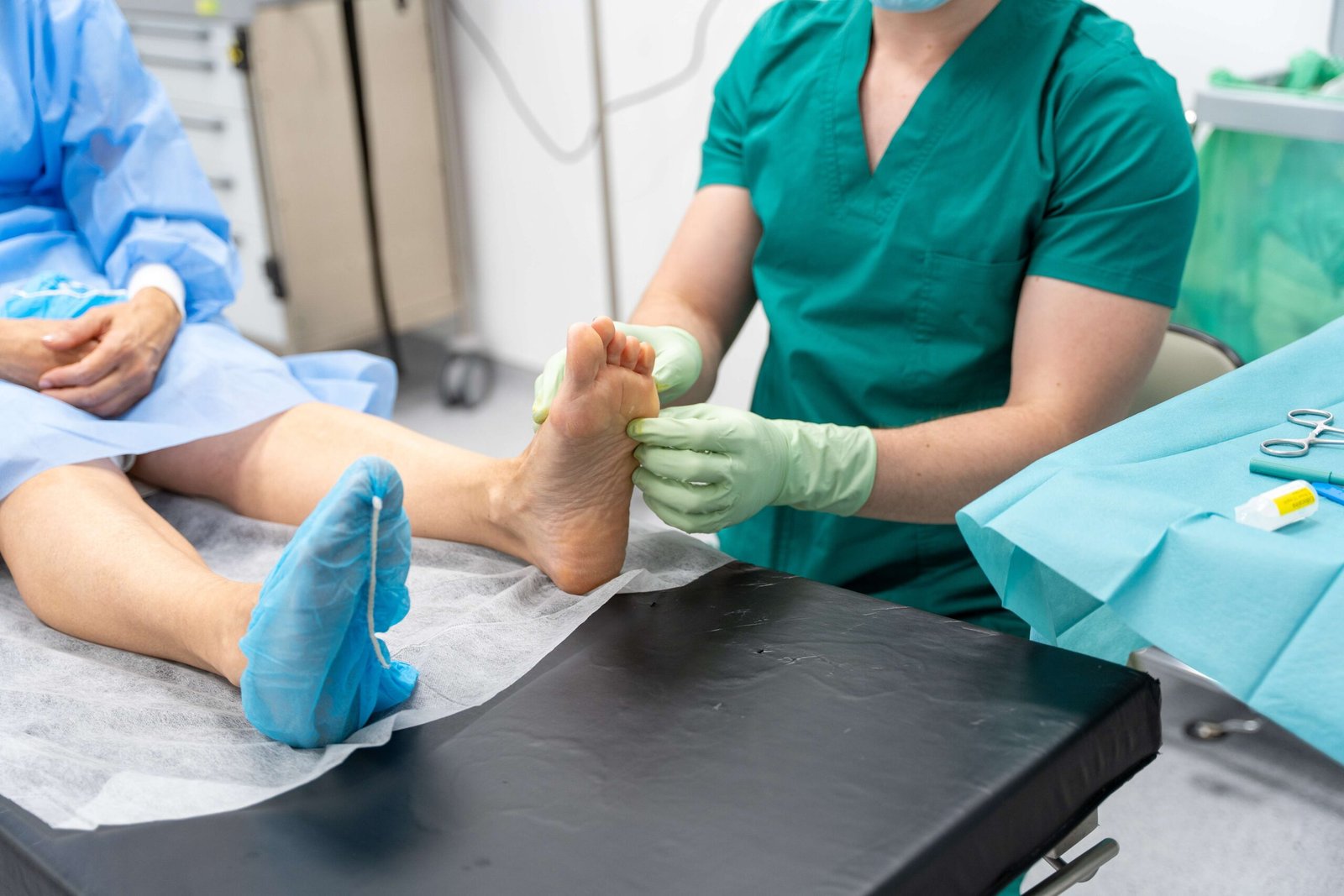
By Mr Kaser Nazir, Consultant Podiatric Surgeon.
Bunions can be corrected with several different surgical techniques, and the right choice depends on the size of the deformity, the health of the joint, and the quality of the bone. This page compares the main approaches: keyhole surgery (including Mr Nazir’s Rapid Bunion™ protocol), Scarf/Akin, Lapidus fusion, and MICA, using the evidence and clinical reasoning Mr Nazir applies when selecting a technique for each patient. For a fuller introduction to the procedure itself, see the Rapid Bunion™ overview page.
For a complete side-by-side breakdown of each technique, read Bunion Surgery Techniques Explained: Keyhole, Scarf/Akin, Lapidus & More.
The Basics
What are the main types of bunion surgery available today?
The main techniques are Scarf/Akin, Lapidus fusion, MICA (minimally invasive chevron Akin), and Mr Nazir’s Rapid Bunion™ protocol, a further-generation form of keyhole surgery. Scarf/Akin is an open procedure that cuts and repositions the bone using screw fixation, and is by far the most commonly performed bunion procedure in the world. Lapidus fusion addresses the joint further back in the midfoot, using a plate and screws to fuse it rather than simply repositioning bone. MICA uses keyhole incisions to make a chevron-shaped bone cut and shift it into position, a technique Mr Nazir describes as similar in principle to his own. Mr Nazir practised the Scarf procedure for at least 15 years before moving to keyhole bunion surgery.
What is Rapid Bunion™ and how does it differ from these other techniques?
Rapid Bunion™ is Mr Nazir’s trademarked minimally invasive bunion correction protocol, described by him as generation four keyhole surgery, the latest stage in the evolution of minimally invasive bunion techniques. Earlier generations of keyhole surgery used little or no rigid fixation to hold the corrected bone in place, whereas generation four surgery uses specialist side screws for this type of correction. Mr Nazir states he only performs this generation four technique because it has the best evidence base and is the most advanced form of keyhole bunion correction available to him, reserving Lapidus fusion for the small number of patients where minimally invasive surgery is not suitable. This distinction between generations matters clinically: Mr Nazir notes that early keyhole techniques had higher failure rates, and patients or referrers sometimes mistakenly label all minimally invasive surgery as problematic based on that earlier evidence, when generation four is, in his words, “almost a completely different procedure.”
Is Scarf/Akin still considered a good option?
Scarf/Akin remains a well-established open technique with the longest evidence base of any bunion procedure, and it corrects most deformities except very large or unstable ones. It became a widely accepted technique because screw fixation made outcomes more predictable than earlier open methods. Mr Nazir performed Scarf procedures for over 15 years before adopting keyhole techniques, and he notes it is generally suited to mild or moderate bunions. For most of his current patients, however, Mr Nazir now performs Rapid Bunion™ rather than Scarf/Akin, reserving open surgery for a smaller set of cases.
Comparing the Techniques
When is Lapidus fusion recommended instead of keyhole surgery?
Lapidus fusion is recommended for patients with large deformities, instability at the base of the first metatarsal, or pre-existing arthritis in that joint. Traditionally it was reserved for cases where the intermetatarsal angle (the angle between the first and second metatarsal bones) exceeded 18 degrees, since Scarf/Akin depends on having enough bone width to reposition the bone across that angle. Mr Nazir now reserves Lapidus almost exclusively for unstable midfoot joints or patients with existing arthritis in that joint, rather than using it purely on the basis of deformity size as was traditional practice. It is currently the only open procedure Mr Nazir still performs, since minimally invasive surgery is not suitable for this smaller set of indications.
How does MICA compare with Rapid Bunion™?
MICA and Rapid Bunion™ share the same underlying principle: both use keyhole incisions to make a chevron-shaped bone cut and shift the bone into a corrected position. The key distinction lies in fixation and generation. Earlier minimally invasive chevron Akin techniques, including early MICA generations, used little or no rigid fixation, whereas Mr Nazir’s generation four Rapid Bunion™ protocol uses specialist side screws to hold the correction in place. Mr Nazir describes MICA as “a more normal technique” relative to his current approach, and now performs his own protocol for most patients rather than earlier-generation MICA.
What factors determine which technique is right for a specific patient?
The choice depends on the severity of the deformity, joint stability, and bone quality. Scarf and Akin suit mild to moderate bunions; Lapidus is indicated for more severe deformities or instability at the first metatarsal joint; and for the majority of his patients today, Mr Nazir performs Rapid Bunion™ unless there is instability requiring a fusion. This is an individualised clinical decision made after assessment, not a one-size-fits-all protocol.
Outcomes and Evidence
Which technique produces the most durable long-term results?
For most patients, keyhole bunion surgery provides durable, predictable results. Mr Nazir states that in 90 to 95% of bunions, his minimally invasive Rapid Bunion™ technique achieves durable outcomes with excellent and predictable results. For patients with pre-existing arthritis or instability in the first tarsometatarsal (TMT) joint (the joint connecting the first metatarsal to the midfoot), a Lapidus fusion is indicated instead. This means the “best” technique is not universal; it is the one matched correctly to the specific joint pathology present.
Are there still cases where open surgery is the better choice?
Yes. The only open procedure Mr Nazir continues to perform is the Lapidus fusion, used specifically where there is instability at the first metatarsal or pre-existing arthritis in that joint. Outside of this smaller set of indications, Mr Nazir uses minimally invasive surgery for most bunions.
Does having a large bunion automatically rule out keyhole surgery?
Not necessarily, though very large or unstable deformities historically pushed surgeons towards Scarf/Akin or Lapidus rather than earlier keyhole techniques. Mr Nazir’s assessment criteria focus on joint stability and bone quality rather than deformity size alone when deciding whether Rapid Bunion™ is appropriate. Patients with larger deformities should still be assessed individually rather than assuming open surgery is required by default.
Common Concerns and Misconceptions
Is it true that all keyhole bunion surgery carries a higher failure rate?
This is a misconception rooted in outdated evidence. Mr Nazir explains that early-generation keyhole and minimally invasive techniques did have higher failure rates, and this led to a broader mislabelling of all minimally invasive bunion surgery as problematic. Generation four surgery, which includes Rapid Bunion™, is described by Mr Nazir as “almost a completely different procedure” from those earlier generations, largely due to the introduction of specialist side-screw fixation. Patients researching outcomes data should check which generation of technique that data refers to, since older studies do not reflect current fixation methods.
What typically goes wrong when a patient has a poor outcome from bunion surgery?
Mr Nazir identifies the wrong procedure for the wrong patient as a leading cause of recurrence, often resulting from undercorrection (a surgical judgement issue) or failure of the fixation during post-operative recovery. This underlines why technique selection, based on deformity severity, joint stability and bone quality, is treated as a clinical decision made case by case rather than a default choice.
Is laser bunion surgery a fifth option alongside these four techniques?
No. Laser bunion surgery is not a recognised surgical correction method; lasers can reduce inflammation around the bunion bump but cannot remove the underlying bony deformity. Patients referring to “laser bunion surgery” are usually describing keyhole bunion surgery, and the two terms are often confused. Anyone considering treatment should clarify with their surgeon whether a genuine bone-correcting technique, such as those compared above, is being discussed.
Next Step
Choosing between Scarf/Akin, Lapidus, MICA and Rapid Bunion™ depends on an individual assessment of deformity size, joint stability and bone quality. Patients wanting to understand which technique applies to their own bunion can book a consultation with Mr Nazir for a personalised assessment and treatment recommendation.