Yes. In Mr Kaser Nazir’s Rapid Bunion™ protocol, his trademarked minimally invasive bunion correction technique, small screws are used to hold the realigned bone in its corrected position. This page explains why screws are used, how they are placed, and what that means for recovery. To see how this compares with other approaches, read Bunion Surgery Techniques Explained: Keyhole, Scarf/Akin, Lapidus & More.
The Basics of Screw Fixation
Why are screws used in keyhole bunion surgery?
Screws hold the bone in its corrected position after it has been cut and realigned. Mr Nazir explains that the rigid screws used in the Rapid Bunion™ protocol “allow you to early weight bear” because “they hold the position even through high stress through the foot”. Without stable fixation, the bone could shift out of position before it has had time to heal. This stability is one of the reasons patients can begin walking on the foot from the day of surgery.
Are the screws permanent or removed later?
The screws are designed to be left in permanently. There is no need to have them removed, and most patients experience no long-term pain or discomfort from them.
How small is the incision needed to insert the screws?
Minimally invasive bunion surgery, using X-ray guidance, inserts screws through small incisions rather than the larger cut required in traditional open surgery. This keyhole approach reduces the amount of soft tissue disruption compared with open techniques, which is one of the core distinctions between minimally invasive and traditional bunion correction.
How Screw Placement Works During Surgery
How does Mr Nazir position the screws accurately?
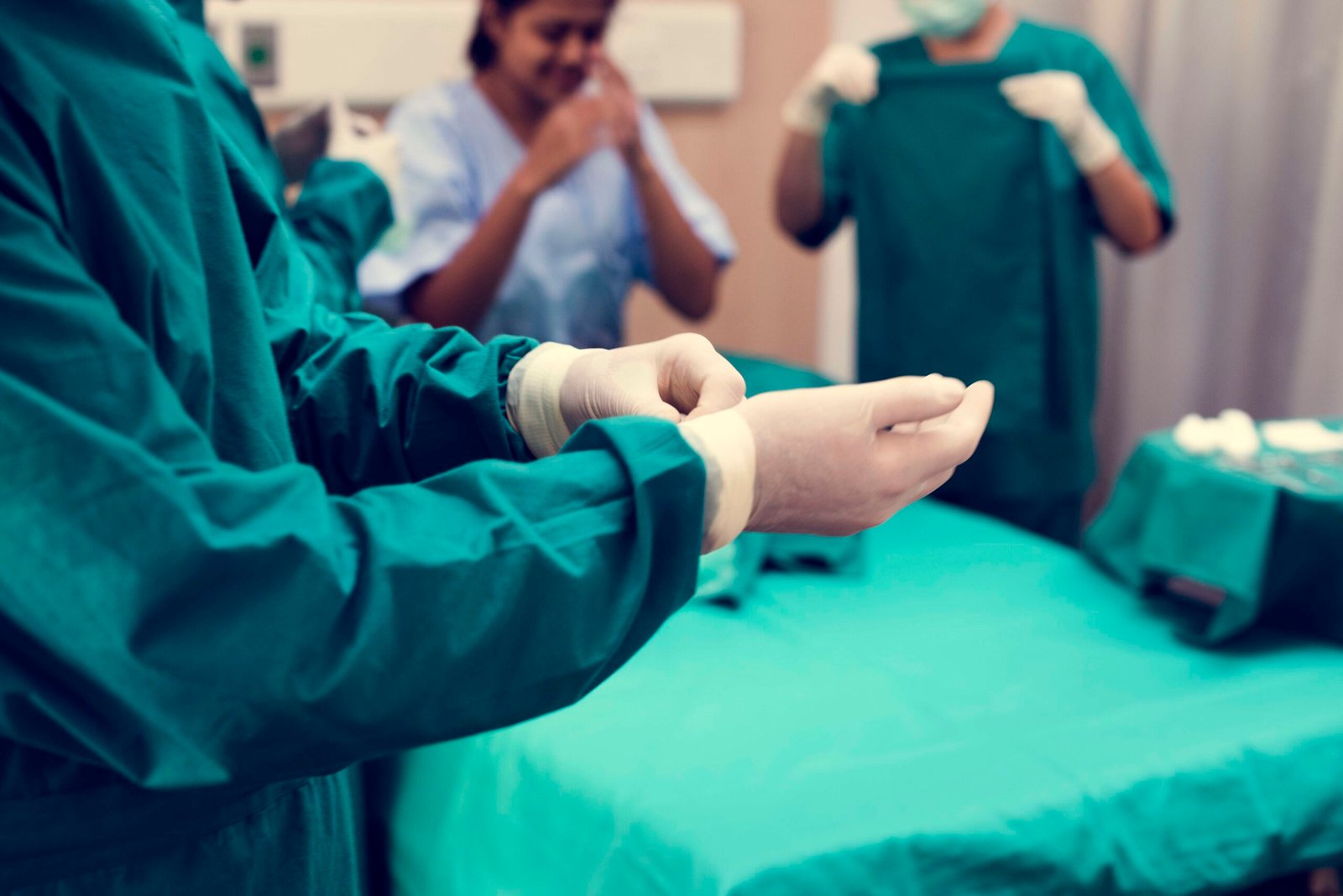
The procedure is performed with the patient positioned under live X-ray imaging throughout. Mr Nazir describes the process directly: “each maneuver performed by the surgeon involves using X-ray guidance to cut the bone at the correct position, to reset it, to correct the deformity fully, and to place the screws”. This real-time imaging allows continuous verification that the bone correction and screw position are accurate before the incision is closed.
What is the hardest technical part of placing the screws?
Mr Nazir identifies screw and wire placement as the most demanding part of the entire procedure. When training other surgeons, he notes that “the hardest part of the procedure is placement of the screws and the wires,” because cutting the bone, resetting it, and then placing the screws in the most accurate position is what determines “effective stability, effective healing and full correction”. This is a useful benchmark for patients researching a surgeon’s experience: screw and wire placement accuracy, not just the bone cut itself, is what separates a well-executed keyhole procedure from a poorly executed one.
How long does the screw placement add to the procedure?
Screw placement is part of the overall procedure time, which typically runs between 30 and 40 minutes depending on the patient and the severity of the deformity. This is a total procedure time rather than a separate figure for screw insertion alone.
Screws and Recovery
Do the screws allow patients to walk immediately after surgery?
Yes, this is one of the direct benefits of rigid screw fixation. Mr Nazir attributes same-day walking largely to two factors: less tissue trauma, meaning there is no significant wound healing risk from a large incision, and the rigid screws themselves, which “hold the position even through high stress through the foot”. Together, these allow patients to begin early weight-bearing and avoid prolonged immobilisation.
Could the screws fail or move after surgery?
Mr Nazir notes that failure of fixation during post-operative recovery is one of the recognised causes of a poor surgical outcome, alongside undercorrection of the deformity. He describes this as a surgical complication rather than a routine risk, and stresses that matching the right technique to the right patient is central to avoiding it. Patients with concerns about fixation stability should discuss their specific bone structure and deformity severity during assessment.
Common Misconceptions
Is keyhole bunion surgery the same as laser bunion surgery, and does that affect whether screws are used?
No, these are different procedures, and the confusion is common. Many patients asking about “laser bunion surgery” are actually referring to keyhole bunion surgery. There is no proven laser method for removing the bony deformity that causes a bunion; lasers can only reduce inflammation around the bump, not correct the underlying bone position. Screw fixation is a feature of keyhole (minimally invasive) surgery, not laser treatment, because only a surgical bone correction requires fixation to hold its new position.
Does using screws mean the surgery costs more?
The specialised equipment involved in keyhole bunion surgery, including the imaging and fixation systems used for screw placement, is newer and more technologically advanced than that used in traditional open surgery, and this is reflected in the overall cost. Screws themselves are one part of a broader cost structure that also depends on the complexity of the case and whether additional procedures, such as other toe surgery, are needed.
Is keyhole surgery with screw fixation suitable for every type of bunion?
Not always. Mr Nazir explains that keyhole bunion surgery is not appropriate where there are arthritic changes to the big toe joint. He also reserves the traditional Lapidus fusion technique, rather than his Generation 4 minimally invasive approach, for the small number of patients where minimally invasive surgery is not indicated. An accurate diagnosis, confirmed by X-ray, is the starting point for determining which technique is right, and therefore which fixation method is right, for a given foot.
Are all keyhole bunion techniques with screw fixation the same?
No. Mr Nazir is clear that keyhole bunion surgery has evolved through several generations of technique, and treating them as interchangeable is a common misconception. He notes that “generation one surgeries had higher failure rates” and that this led some clinicians to label all minimally invasive bunion surgery as problematic, when in fact “generation four is almost a completely different procedure”. Mr Nazir performs only the Generation 4 minimally invasive technique, describing it as having “the best evidence base” and being “the most advanced of keyhole bunion surgical techniques”. Screw fixation quality and placement accuracy are part of what distinguishes newer generations of the technique from earlier, less refined versions.
Next Steps
Screw fixation is a core part of what allows Mr Nazir’s Rapid Bunion™ patients to bear weight and begin walking from the day of surgery, but suitability depends on individual bone structure, deformity severity, and whether joint arthritis is present. Patients considering keyhole bunion surgery can book a consultation with Mr Nazir to have their foot assessed by X-ray and discuss whether screw-fixated minimally invasive correction is the right option.
Book a consultation with Mr Nazir to find out if Rapid Bunion™ is right for you.