
Summer brings specific challenges for bunion pain: swelling in the heat, tighter footwear, and questions about whether the season affects surgical timing. This guide answers the most common questions patients ask about managing bunion symptoms through the warmer months and deciding when surgery makes sense, drawing on the Rapid Bunion™ protocol developed by Mr Kaser Nazir.
For a closer look at whether surgery is the right next step, Do You Need Bunion Surgery? Causes, Non-Surgical Care & Risks covers the full decision-making picture.
Footwear and Symptom Management
Does hot weather make bunion pain worse?
Warmer weather can increase swelling in the feet, and this swelling adds pressure inside closed shoes and trainers, which may worsen bunion discomfort. Mr Nazir notes that patients often report swelling more in summer, though this is anecdotal and not usually significant in otherwise healthy individuals. The mechanism is straightforward: swollen feet inside a snug shoe create compression around the bunion, and that compression is what drives the pain rather than the heat itself. Choosing shoes with more room to accommodate natural fluctuation in foot volume is a practical first step.
What footwear helps reduce bunion pain during summer?
Shoes with a wider toe box, softer upper materials, good arch support, enough depth to avoid rubbing, and a lower heel height are recommended for reducing pressure on the bunion. If formal shoes are unavoidable during the day, commuting in comfortable trainers and changing footwear once at the destination reduces the total time spent under pressure. Open sandals, which are more practical in summer than in colder months, can also relieve pressure on the bunion by removing the constriction of a closed shoe entirely.
Should high heels be avoided in summer specifically?
High heels increase pressure through the forefoot at any time of year, and this effect is not unique to summer, but the combination of heat-related swelling and heel pressure can make flare-ups more noticeable. Reducing heel use when symptoms are active helps lower pressure on the big toe joint and the surrounding soft tissue. Patients who need to wear heels for work or events should treat symptom flare-ups as a signal to scale back rather than push through the discomfort.
How can bunion pain at night be managed during hot weather?
Resting the foot in the evening, particularly after a day of activity or heat exposure, can help symptoms settle before bed. Elevating the foot and avoiding additional pressure around the bunion reduces discomfort overnight. Persistent nighttime pain should not be dismissed as a minor seasonal irritation. It is often a sign that the bunion is causing ongoing inflammation or joint irritation that warrants proper assessment.
Can bunion correctors or splints help get through summer without surgery?
Bunion corrector devices and similar splints can relieve some symptoms in very early-stage cases, but they do not stop the underlying deformity from progressing over time. The deformity itself is caused by the metatarsal bone and the big toe deviating in opposite directions, alongside the bony prominence that forms the visible bunion. Non-surgical options such as wider shoes, protective cushioning, toe spacers, splints and bespoke orthotics are genuinely effective at the early stage for alleviating symptoms and slowing progression, but they are management tools, not corrective treatments.
Deciding Whether Surgery Is Needed
How do I know if my bunion needs surgery rather than ongoing conservative care?
Surgery becomes a reasonable consideration when symptoms are severe, when conservative treatments are no longer helping, or when the bunion is affecting walking, work or daily activities. There is no fixed rule dictating when surgery is the right option. The decision depends on symptom severity, impact on quality of life, and any other health conditions that might affect surgical eligibility. Surgery is currently the only way to fully correct the deformity and realign the toe, since non-surgical treatments manage symptoms rather than reverse the underlying bone position.
What signs suggest it’s time to see a specialist rather than keep managing symptoms at home?
A specialist consultation is worth arranging if bunion pain regularly disrupts sleep, if there is swelling, redness or throbbing around the big toe joint, if pain returns daily after wearing shoes, or if the big toe joint feels stiff or painful to move. Struggling to find comfortable footwear and finding that conservative treatments no longer help are also clear indicators. Booking a consultation allows a proper assessment of whether the bunion has progressed to the point where surgical correction is the more appropriate route.
Timing Surgery Around the Summer Season
Is summer actually a good time to have bunion surgery?
There is no clinical reason to prefer one season over another for scheduling surgery. The deciding factor is whether the patient’s own timetable allows enough time to recover properly. Mr Nazir has stated plainly that he does not have a seasonal preference for scheduling procedures, and the right timing depends on the individual patient’s circumstances rather than the calendar. Some patients choose summer because it is quieter at work, while others prefer winter so they can stay indoors during poor weather while recovering.
What is the actual benefit of having bunion surgery in summer?
The main practical advantage of summer surgery is footwear flexibility: if postoperative swelling occurs, open-toe sandals can be worn without the restriction of needing to fit swollen feet into closed shoes. This removes one of the more frustrating aspects of early recovery, when standard footwear may not comfortably accommodate a healing, swollen foot. It is a genuine convenience rather than a claim about faster healing.
Are there drawbacks to scheduling surgery in summer?
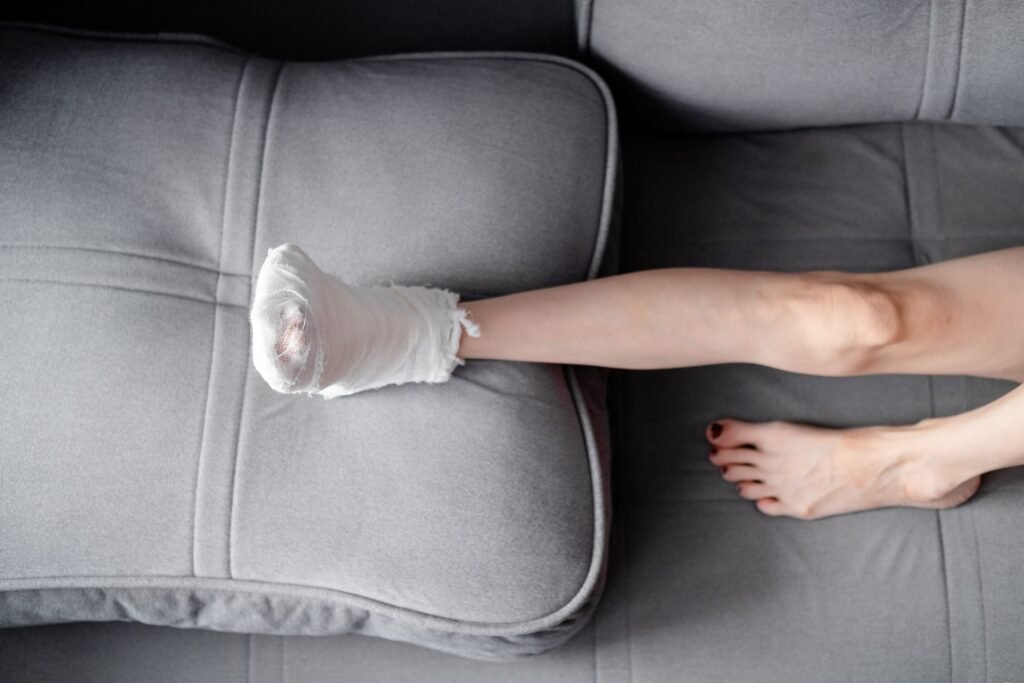
Yes. The main drawback is that early recovery requires a significant amount of rest with the foot elevated, and some patients find it difficult to stay indoors during the warmer months when the appeal of outdoor activity is highest. The first two weeks after surgery involve very careful mobilisation, with weight-bearing limited to no more than 10 minutes per hour. Patients who value being outside in summer should weigh this restriction seriously before choosing a summer surgery date.
What does the recovery timeline actually look like after bunion surgery?
In the first two weeks, mobilisation is deliberately limited, with weight-bearing capped at around 10 minutes per hour to protect the surgical site. Activity can gradually increase between weeks two and four, though a postoperative shoe is typically worn for up to four weeks. Some patients return to trainers at the two-week mark while others need longer, and running is not permitted until eight weeks after surgery.
Does summer swelling after surgery cause complications?
Patients often report slightly more swelling in summer, which Mr Nazir attributes anecdotally to humidity, but this is not usually significant enough to cause problems in healthy individuals. It is a comfort and footwear consideration rather than a clinical risk factor. Anyone with concerns about unusual swelling, redness or increasing pain during recovery, in any season, should raise this directly with their surgical team rather than assuming it is seasonal.
Is it a misconception that surgery must be scheduled around the seasons for the best outcome?
Yes. This is a common misconception. There is no evidence that surgical outcomes differ based on the time of year the procedure is performed; the choice is a matter of lifestyle convenience, not clinical necessity. The only genuine seasonal consideration is the practical one around footwear and indoor recovery time, not the quality or speed of healing. Patients should choose their surgery date around their own schedule, work commitments and recovery support, rather than trying to time it to a particular season for medical reasons.
Next Steps
Bunion pain that worsens in summer heat, disrupts sleep, or no longer responds to footwear changes and conservative measures is a reasonable prompt to seek a professional opinion. Booking a consultation with Mr Nazir allows for a proper assessment of symptom severity and a discussion of whether Rapid Bunion™ or continued conservative management is the right next step, on a timeline that suits the patient rather than the calendar.
Book a consultation with Mr Nazir to discuss your symptoms and find out whether surgery is the right option for you.