Consultant-led care means that Mr Nazir, as the treating NHS Consultant, personally oversees a patient’s diagnosis, surgical plan and recovery, rather than delegating those decisions to junior staff or rotating clinicians. For bunion patients considering Rapid Bunion™, Mr Nazir’s trademarked minimally invasive bunion correction protocol, this matters because continuity of care from one experienced specialist directly affects outcomes and trust throughout the treatment journey. This is one of several factors worth weighing when choosing the right bunion surgeon in the UK.
What Does Consultant-Led Care Mean in Practice?
What does “consultant-led care” actually involve day to day?
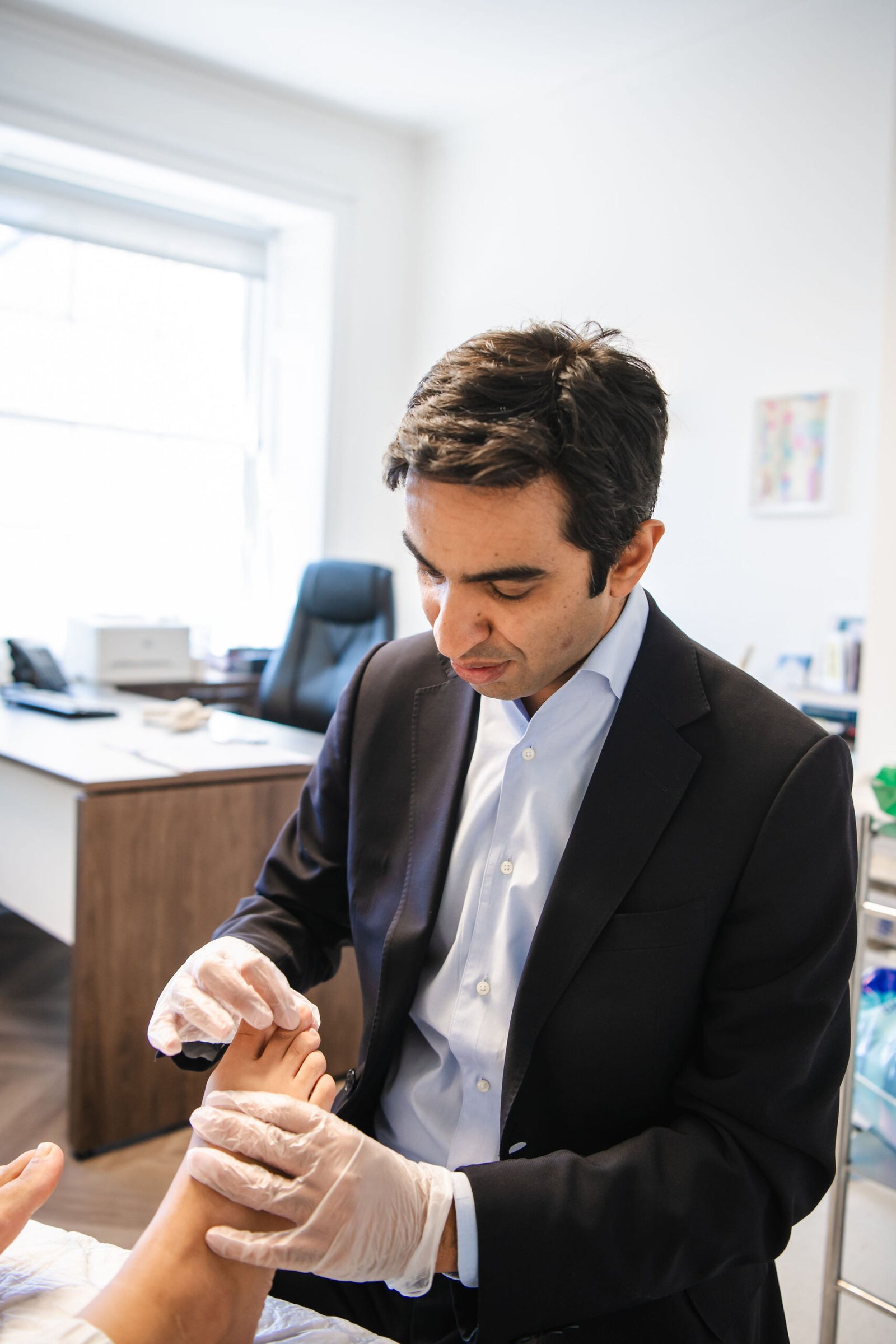
Consultant-led care means the same consultant surgeon is involved at every stage of a patient’s treatment, from the first assessment through to surgery and follow-up, rather than the patient being passed between different members of a team. Mr Nazir personally supervises care from consultation to post-operative follow-up, with no handover to junior staff. This is different from models where a patient is assessed by one clinician, operated on by another, and followed up by a third. For a patient, it means the person who diagnosed the bunion is the same person planning the surgery and the same person checking the healing foot weeks later.
Why does it matter who performs my consultation, not just my surgery?
The initial consultation is where the safest and most suitable treatment plan gets chosen for that patient’s specific feet, not simply the fastest or cheapest option. A detailed diagnostic assessment and a tailored surgical plan are part of what every patient receives under this model. Getting this stage right, with the treating surgeon directly involved, reduces the risk of a mismatch between the technique offered and what a patient’s foot actually needs. Patients considering surgery are encouraged to book a consultation before committing to any procedure.
Does an NHS Consultant title actually mean anything for private bunion surgery?
Holding an NHS Consultant post is a recognised indicator of formal clinical governance and oversight that a surgeon has been through, according to Mr Nazir. Asked what he would want to know if choosing a bunion surgeon himself, Mr Nazir said he would ask whether the surgeon has held a previous NHS post, “which in the United Kingdom shows some sort of formal governance process that they have to maintain or have been through in the past.” This is one of several factors, alongside training background and surgical volume, that Mr Nazir identifies as important when choosing the right bunion surgeon in the UK.
Specialist Focus vs General Clinics
Is it better to see a bunion specialist than a general foot and ankle surgeon?
Mr Nazir’s own view, based on 20 years in the procedure, is that focusing on one operation produces more consistent outcomes than spreading a practice across general foot surgery. He explained that most things in surgery are “about repeatability and consistency,” and that by performing only bunion and foot reconstruction procedures using keyhole techniques, he has achieved outcomes that have “proven true” over time. In contrast, surgeons doing a broad range of general foot surgery “don’t necessarily hone in on one procedure, which in itself is going to affect outcomes and results.” This is why Mr Nazir describes bunion surgery as a deliberate hyperfocus rather than one service among many.
What should I actually ask a surgeon before choosing them?
Mr Nazir recommends asking about the type and range of surgeries a surgeon performs, their surgical volume, their complication and revision rates, and the depth of their foot surgery training. He notes that “a high-volume surgeon is generally going to have better outcomes because of the amount of volume they do.” Training background matters too, specifically whether a surgeon is orthopaedic-trained, how long their training was, and how robust it was. Asking these questions directly, before booking surgery, is a reasonable way for any patient to compare surgeons on evidence rather than reputation alone.
Common misconception: does “consultant-led” just mean a consultant signs off on the plan?
No. In some clinics, a consultant may approve a treatment plan without being the person who carries it out or follows the patient through recovery. Under this model, Mr Nazir is described as personally supervising care at every stage, from consultation through to post-operative follow-up, with no handover to junior staff. The distinction is between a consultant lending their name to a plan versus a consultant remaining directly involved in every clinical decision affecting that patient.
What This Means for the Surgical Team and Facility
Does consultant-led care mean I only ever see one person?
Consultant-led care centres decision-making and clinical responsibility with Mr Nazir, but he works within a dedicated multidisciplinary team at his Harley Street practice, built specifically around the bunion patient journey. This team supports areas such as written patient education, recovery guidance, and mobility expectations. The distinction is that supporting roles assist the patient journey, while the core clinical decisions, diagnosis, surgical planning, and follow-up assessment, remain with Mr Nazir directly.
Where is the surgery actually performed?
Mr Nazir’s practice is based in a specialised central London facility carrying out a high volume of foot and ankle surgery, using keyhole bunion surgery techniques with a high level of expertise and equipment. This facility-level specialisation sits alongside the consultant-led model: a dedicated environment for foot and ankle surgery, overseen throughout by the same consultant.
Cost, Booking and Next Steps
Does consultant-led care affect the cost of treatment?
The cost of bunion surgery reflects what is included in that package of care, and understanding this is part of what the consultation is for. Because Mr Nazir is personally involved at every stage rather than delegating stages of care, patients are paying for direct access to one experienced surgeon throughout, not a variable team assembled around a single operation. Patients wanting a clear breakdown of what is included should raise this directly during consultation.
Is consultant-led care only for certain types of patients?
This model of personally overseen care is designed for patients who want direct, consistent access to the surgeon managing their case, including those who value personalised contact and leadership throughout treatment. It is available to any patient booking through the practice, not restricted by procedure complexity.
What is the first step if I want consultant-led bunion care?
The recommended first step is a consultation, either to assess suitability for Rapid Bunion™ or to get clarity before committing to any surgery. Patients who are not ready to commit to surgery can book a no-obligation discovery call to ask questions first. Those ready to proceed with a full clinical assessment, including the X-rays required for diagnosis, can book a consultation directly with Mr Nazir to discuss whether Rapid Bunion™ is the right option for their feet.