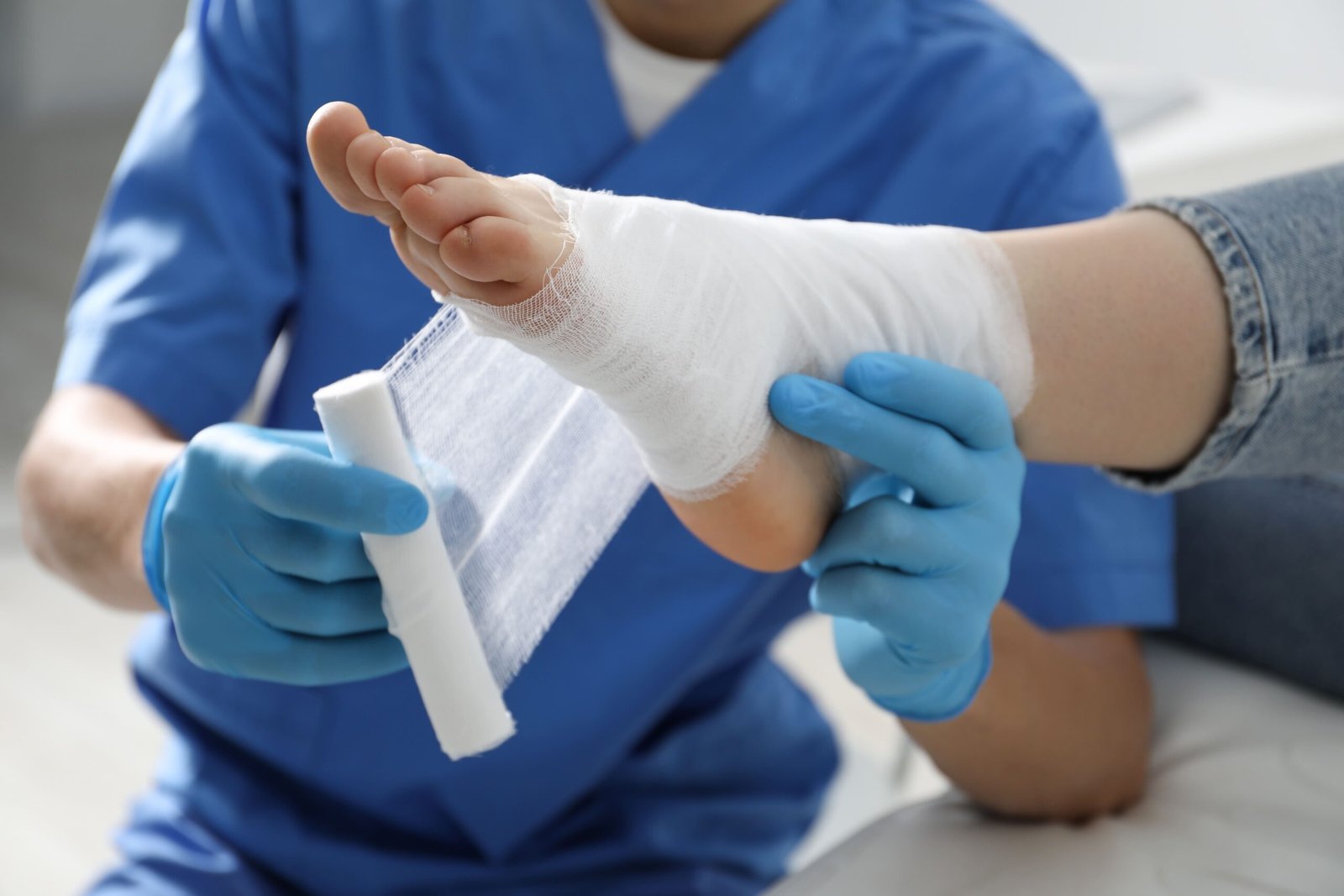
Bunion surgery scars from Mr Nazir’s keyhole technique are typically 2–4mm in size, small enough that most patients cannot locate the entry points by 4–6 months after surgery. This is a direct result of the minimally invasive approach used in Rapid Bunion™, Mr Nazir’s trademarked minimally invasive bunion correction protocol, which corrects the deformity through a handful of puncture-sized incisions rather than a single long cut.
Find out what recovery looks like week by week in our full guide: Bunion Surgery Recovery: Timeline, Pain & Return to Activity.
Scar Size and Appearance
How big are the scars after keyhole bunion surgery?
The incisions used in keyhole bunion surgery range between 2 and 4mm. Mr Nazir explains that this range reflects the tools involved: the burrs used to reshape the bone are around 2mm wide, while the titanium screws inserted to hold the correction in place are 3–4mm wide, so the incision has to accommodate whichever instrument is passing through it. Each of the two to four incisions used during the procedure is described as puncture-sized, just a few millimetres wide.
Where on the foot are the scars located?
The scars sit on the inside of the first metatarsal, near the big toe joint, rather than on top of the foot. Mr Nazir notes there are typically three to four small scars in this location, and because they are not positioned on the visible upper surface of the foot, they are not easily seen even before they fade.
How does this compare with traditional open bunion surgery?
Open bunion surgery, which corrects the deformity through a single larger incision, generally leaves a scar that is prominent and easy to identify. Keyhole bunion surgery, by contrast, produces scars that are hardly visible, to the point where careful inspection is needed to find them at all. This difference in visible scarring is one of the clearest, most consistently reported distinctions between the two approaches based on Mr Nazir’s own case experience. Many patients ask whether minimally invasive bunion surgery is as effective as open surgery when weighing up these cosmetic benefits against long-term results.
Scar Fading and Timeline
Will the scars fade over time, and how long does that take?
Yes. In most cases, the scars become effectively undetectable by 4–6 months after surgery, to the point where it is difficult to identify where the incision was made. Separately, Mr Nazir’s clinic materials describe the scars as almost invisible after 6–12 months, with each incision measuring only a few millimetres across. The exact fading timeline can vary slightly by individual, but the direction of travel is consistent: scars becoming progressively less visible over the months following surgery.
Do all patients heal to the same degree, or do some scars remain visible?
Not universally. Mr Nazir notes that certain skin types can show more visible scarring even after healing, though this remains uncommon given how small the incisions are to begin with. Patients with a personal or family history of raised or pigmented scarring may wish to raise this during consultation so that expectations are set accurately from the outset.
What is the biggest misconception patients have about bunion surgery scarring?
The most common misconception is that bunion surgery scarring will be large and prominent, an assumption carried over from traditional open surgery, where a single larger incision is the norm. Mr Nazir is clear that this is not the case with keyhole bunion surgery, where the incisions are a fraction of the size. A second, related misconception concerns exactly how these small scars behave over time: patients often underestimate just how much they fade, rather than overestimate it.
Recovery and Practical Timing
When can normal footwear be worn again after surgery?
Most patients move into trainers at around 3–4 weeks after surgery, progressing to closed shoes by 6–8 weeks. This timeline reflects bone healing and swelling reduction rather than the incisions themselves, which close and settle well before full shoe tolerance is regained. Understanding the full bunion surgery recovery time is essential for planning your return to work and daily activities.
How does scarring relate to overall recovery time?
Smaller incisions are linked to more than cosmetic benefit. Mr Nazir notes that keyhole bunion surgery carries less risk of infection because of the smaller wounds involved, along with reduced post-operative swelling. Because the joint capsule itself is not cut open during the procedure, patients also tend to return to most sports, including high-impact contact sports, by around 4 months, compared with recovery timelines that can extend up to a year with open bunion surgery techniques.
Is keyhole surgery suitable for severe bunions, or only mild ones?
Keyhole surgery is suitable for around 95% of cases, including many that are classed as severe deformities. Only rare hypermobility conditions, where the joint is unusually loose or unstable, typically require an alternative open fusion approach instead. This means scar size and visibility are not usually a trade-off patients need to weigh against the severity of their bunion; the minimally invasive approach applies to the large majority of presentations Mr Nazir sees.
Are screws left in permanently, and do they affect the scar?
Yes, titanium screws are used to secure the corrected bone position and support faster healing. These screws are inserted through the same small incisions used for the correction itself, which is why the incision size is calibrated to the width of the screw, typically 3–4mm, rather than being larger than necessary.
Does having both feet operated on at once change scarring or recovery?
Scar size and healing pattern are not materially different whether one or both feet are treated in the same session; the difference lies in mobility during early recovery. Mr Nazir explains that recovery time for bunion surgery on both feet still involves six to eight weeks for bone healing, though mobility is more limited for the first three to four weeks, with swelling taking three to four months to fully settle. Patients having both feet treated together will need extra support at home and should plan to work from home for three to four weeks, whereas those having one foot treated at a time are typically mobile again within five to seven days.
Will the foot look and function normally again after healing?
The aim of the procedure is to return the foot to improved function and structural stability, not simply to remove the visible bump. Combined with minimal scarring, this means most patients regain a foot that both looks and performs closer to normal than before surgery, once the months-long healing and fading process has completed.
Next Step
Patients concerned about visible scarring, or wanting to understand how the Rapid Bunion™ protocol applies to their specific case, are encouraged to book a consultation with Mr Nazir to discuss individual skin type, bunion severity and expected recovery timeline in detail.