By Mr Kaser Nazir, Consultant Podiatric Surgeon.
Some pain and swelling after bunion surgery is expected and normal, especially in the first two weeks, and most patients describe it as mild to moderate rather than severe. Understanding what typical post-operative pain feels like, and which symptoms warrant a call to the clinic, helps patients recover with confidence rather than unnecessary worry. For a full breakdown of what to expect week by week, see our guide to Bunion Surgery Recovery: Timeline, Pain & Return to Activity.
What Level of Pain Is Normal After Bunion Surgery?
Is bunion surgery as painful as people expect?
No. Most patients report only mild discomfort after minimally invasive bunion surgery, often needing just paracetamol after the first couple of days. This is a common misconception that puts many patients off seeking treatment, but with minimally invasive, keyhole techniques, pain is often less than expected because there is less disruption to the surrounding soft tissues compared with traditional open surgery. An ankle block anaesthetic, a local anaesthetic injected around the ankle, keeps the foot numb during the early recovery period, further reducing discomfort in the first day or so.
What does normal post-operative discomfort feel like?
Normal discomfort is typically mild to moderate, with some throbbing when the foot is lowered below heart level and increased swelling after standing for long periods. This throbbing sensation is a common and expected part of healing, caused by blood flow returning to the area, and it usually settles when the foot is elevated again. It is not, on its own, a sign of a problem.
How much swelling should I expect?
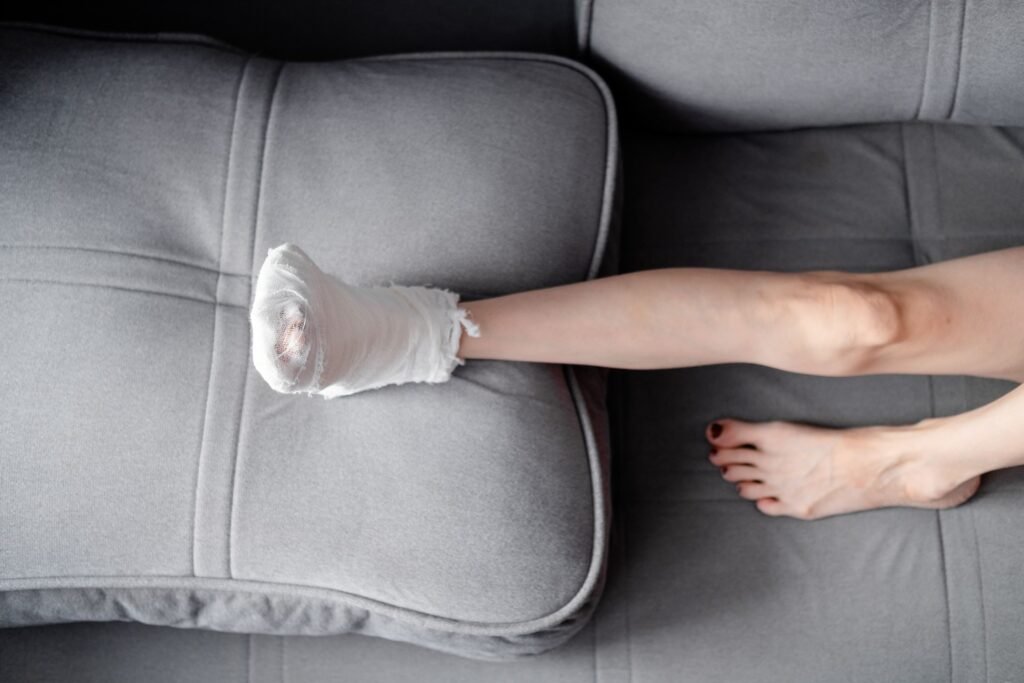
Swelling is completely normal after bunion surgery, and even with minimally invasive techniques, it can continue to improve gradually over several months. This is one of the more misunderstood parts of recovery: swelling reducing slowly over months does not mean healing has stalled. Elevation remains one of the most effective ways to manage and reduce it during the recovery period.
Why does my foot hurt more at night after surgery?
Bunion-related pain can feel worse at night because the joint and surrounding soft tissues have been irritated throughout the day, and once movement stops and distractions fade, aching or throbbing becomes more noticeable. This pattern applies both before and after surgery, as the underlying soft tissue irritation follows the same mechanism. Elevating the foot in the evening and avoiding prolonged standing during the day can help reduce how pronounced this feels at night.
Managing Pain in the Early Recovery Period
What is the most effective way to manage swelling and discomfort?
Elevation is consistently identified as one of the most effective tools for controlling both swelling and the associated discomfort. Keeping the foot raised above heart level, particularly in the first two weeks, reduces the pooling of fluid that drives both swelling and the throbbing sensation many patients notice. Patients are typically advised to prioritise elevation over medication where possible, using paracetamol as needed for breakthrough discomfort.
Do I need strong painkillers after surgery?
Most patients do not. The typical experience involves needing only paracetamol after the first couple of days, rather than stronger prescription painkillers. This reflects the reduced soft tissue trauma associated with keyhole techniques compared with traditional open bunion surgery. Patients with a lower pain tolerance or more complex corrections should discuss individual pain management expectations directly with their surgeon during consultation.
Can I walk on the foot straight after surgery, or is pain expected to stop me?
Yes, walking the same day is typical, and this is not something patients need to fear will cause damage or excessive pain. Most patients are able to walk on the day of surgery itself in a post-operative shoe, though elevation remains key for the first two weeks to manage swelling. This directly challenges the common misconception that patients cannot walk for weeks after bunion surgery. Discomfort during this early walking period is usually manageable and does not typically prevent basic mobility around the home.
Is it normal to feel discomfort using stairs after surgery?
Yes, mild discomfort using stairs in the first days after surgery is common, and most patients are able to manage stairs carefully from the first day if necessary. It is sensible to take stairs slowly, use a handrail, and limit trips up and down to only those that are necessary, avoiding repeated unnecessary strain on the foot while it begins healing.
When Pain May Signal a Problem
How can I tell the difference between normal post-surgical pain and a warning sign?
Normal pain after bunion surgery is generally described as mild to moderate, with predictable patterns such as throbbing on lowering the foot or increased swelling after standing. Pain that is severe, escalating rather than settling, or accompanied by other concerning symptoms falls outside this expected pattern and should prompt contact with the clinical team. Mr Nazir’s post-operative follow-up care is structured to give patients a clear point of contact if symptoms feel unusual or more intense than described in their recovery guidance, and patients should not hesitate to raise concerns early rather than waiting to see if symptoms resolve on their own.
Does increased swelling always mean something has gone wrong?
Not necessarily. Swelling is an expected part of recovery and can persist and fluctuate for several months even after minimally invasive surgery. Swelling that worsens after standing for long periods is a recognised pattern and responds to elevation. Swelling should be monitored, but on its own, gradual or activity-related swelling is not typically a cause for alarm. Any sudden, dramatic increase in swelling, particularly alongside new or worsening pain, is a reasonable trigger to contact the clinic for advice.
Is it a bad sign if my bunion area still hurts at night weeks after surgery?
Persistent night-time discomfort in the early weeks can reflect the same soft tissue irritation and inflammation pattern seen before surgery, where reduced daytime distraction makes aching more noticeable in the evening. This pattern is expected to ease as healing progresses and swelling reduces over the following months. Patients whose night pain is worsening rather than gradually improving, or who develop new symptoms alongside it, should raise this with their surgical team rather than assuming it will resolve unaided.
What should I do if I am unsure whether my symptoms are normal?
The safest approach is to contact the clinical team directly rather than guessing. Because normal recovery follows recognisable patterns, including mild to moderate discomfort, throbbing on lowering the foot, and gradual swelling that improves with elevation, any deviation from this pattern is worth discussing promptly. Patients considering Rapid Bunion™, Mr Nazir’s trademarked minimally invasive bunion correction protocol, receive structured post-operative guidance describing what to expect at each stage of recovery, which makes it easier to identify when something falls outside the expected range.
Next Step
Pain and swelling that follow the patterns described above, including mild to moderate discomfort, night-time aching that eases with elevation, and swelling that improves gradually over weeks and months, are a normal part of healing after minimally invasive bunion surgery. Patients who are uncertain whether their symptoms fall within this range, or who are still weighing up different types of bunion surgery, can book a consultation with Mr Nazir to discuss their individual case and recovery expectations in detail.
Book a consultation with Mr Nazir to discuss your recovery expectations and find out if Rapid Bunion™ is right for you.