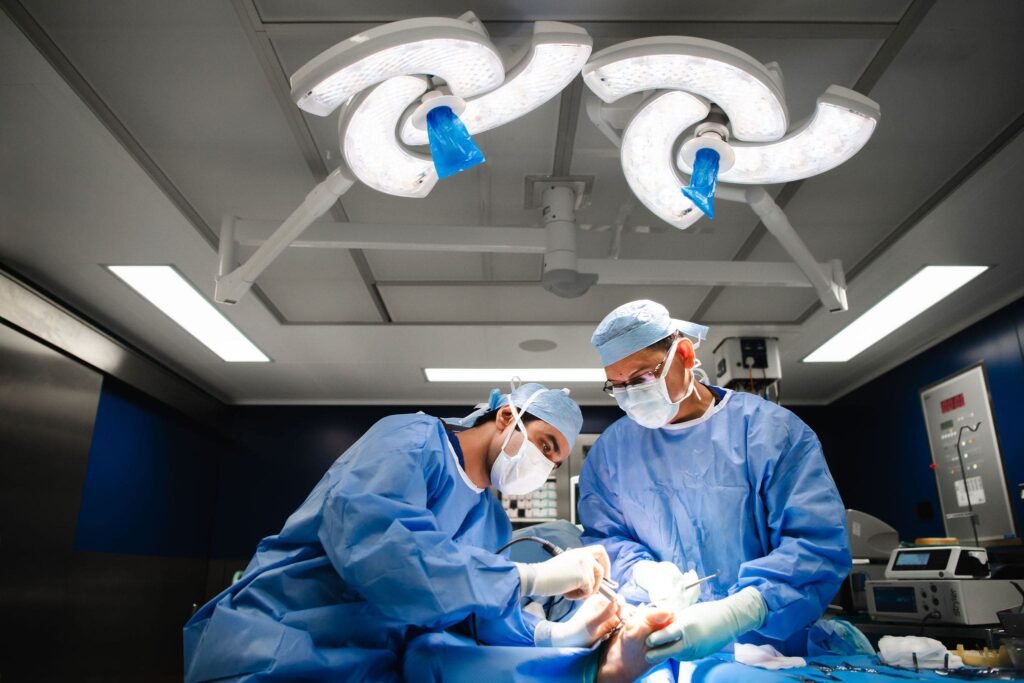

Most patients having Rapid Bunion™ surgery with Mr Nazir are treated under local anaesthetic with light sedation, not a full general anaesthetic. This combination numbs the foot completely using an ankle block while keeping recovery from the anaesthetic itself quick and comfortable. Mr Nazir’s approach to anaesthesia for keyhole bunion correction is explained below, alongside the pros, cons and medical factors that decide which option suits an individual patient.
For a full comparison of keyhole surgery against other established techniques such as Scarf/Akin and Lapidus, see Bunion Surgery Techniques Explained: Keyhole, Scarf/Akin, Lapidus & More.
Understanding the Anaesthetic Options
What is an ankle block and how does it work?
An ankle block is a form of local anaesthetic injected around the three or four nerves that supply the foot, numbing the entire area so the patient feels nothing during surgery. Mr Nazir describes it as “essentially just like going to the dentist.” Two injections are typically given around the ankle, and the numbing effect covers the whole foot for the duration of the operation, which takes approximately 30 to 40 minutes per foot.
What does sedation add on top of the ankle block?
Sedation is a lighter, intravenous form of relaxation given alongside the ankle block, distinct from a full general anaesthetic. Most patients choose this combination because it keeps them comfortable and relaxed without requiring intubation or the deeper unconsciousness of general anaesthesia. Mr Nazir notes that most people have some sedation “so that they cannot remember the procedure and they are more relaxed during the operation setting,” though some patients prefer local anaesthetic alone, much as they might for a dental procedure.
Is general anaesthetic ever used for bunion surgery?
General anaesthetic is used only rarely in Mr Nazir’s practice, typically when a patient has specific medical reasons that make it the safer choice. The final decision depends on the individual patient’s liver and renal function and overall fitness to clear sedation safely, and this is assessed in advance. Where a patient is not fit for sedation, a local anaesthetic alone can be offered instead.
Comparing the Two Approaches
Which anaesthetic does Mr Nazir recommend most often, and why?
Mr Nazir recommends local anaesthetic with sedation for most patients, describing it as “a very safe anaesthetic” that allows the operation to proceed with the patient comfortable throughout, even those with needle phobia or heightened stress. He has used this approach for many years, and reports that patients have been consistently satisfied with the experience.
Does recovery differ depending on which anaesthetic is used?
Yes. Recovery after local anaesthetic with sedation is typically quicker than recovery from a full general anaesthetic, since the body is only under deep sedation rather than general unconsciousness. Patients who have had general anaesthetic sometimes report feeling sick or experiencing nausea afterwards, whereas those under sedation tend to feel notably better post-operatively.
Will I be aware of anything during the procedure?
Under local anaesthetic with sedation, patients are not aware of anything happening during the operation, even though they are not fully unconscious as they would be with general anaesthetic. The foot itself remains completely numb throughout, thanks to the ankle block.
Is local anaesthetic with sedation as safe as it sounds, or is this a compromise?
It is not a compromise. In Mr Nazir’s clinical experience, local anaesthetic with sedation is a safe and suitable option for most patients, and it is his default recommendation rather than a fallback. General anaesthetic is reserved for the rare cases where medical factors make it the more appropriate choice.
Common Questions About Pain and Comfort
Is keyhole bunion surgery painful under local anaesthetic?
The procedure itself is painless due to local anaesthetic. Most patients describe moderate discomfort after the procedure, often managing with paracetamol alone. The ankle block keeps the foot numb well into the early recovery period, which helps control pain naturally as the anaesthetic wears off gradually rather than all at once.
How does the pain compare with traditional open bunion surgery?
Patients having keyhole bunion surgery under light sedation and local anaesthetic generally report significantly less post opeartivepain than those undergoing open surgery, which typically requires a deeper anaesthetic. On a standard pain scale during the first week post-operatively, open surgery patients commonly report pain of 7 to 8 out of 10, occasionally reaching 9, whereas keyhole surgery patients typically report around 2 out of 10 for the first 48 hours, rising to no more than 3 or 4 for a couple of days afterwards. When comparing the main types of bunion surgery, the reduced trauma of minimally invasive techniques is a significant factor in post-operative comfort.
Can I walk on the same day as surgery regardless of anaesthetic type?
Yes. Patients can walk the same day in a post-operative shoe, with elevation recommended as key for the first two weeks of recovery. This applies whether local anaesthetic alone or local anaesthetic with sedation has been used, since the numbness and recovery pattern allow for early protected mobilisation rather than complete bed rest.
A Common Misconception
Does “going under” for bunion surgery always mean a full general anaesthetic?
No. This is a common misconception. Most minimally invasive bunion procedures, including Rapid Bunion™, are performed under local anaesthetic with sedation, not a full general anaesthetic requiring intubation. The safest and most accurate description is that the procedure may be performed under local anaesthetic, with sedation options discussed where appropriate, with the final anaesthetic plan always agreed directly between the patient, Mr Nazir and the anaesthetic team.
Practical Considerations Before Surgery
What happens on the day regarding anaesthetic planning?
Before the anaesthetic is given, checks are made on general fitness, including liver and renal function, to confirm whether a patient can safely clear sedation. If sedation is not suitable, local anaesthetic alone remains an option. On the day itself, the environment is designed to reduce anxiety, with a team trained to pick up on patient concerns and explain the process clearly before anaesthesia is administered.
What should I discuss with Mr Nazir before deciding?
The right anaesthetic choice depends on personal preference, medical suitability and the specific surgical plan, so this is always confirmed during consultation rather than decided in advance. Patients are encouraged to raise any anxieties, needle concerns or past experiences with anaesthesia so the plan can be tailored accordingly.
Key Takeaways
Local anaesthetic with light sedation is the anaesthetic approach Mr Nazir recommends for most Rapid Bunion™ patients, combining a numbing ankle block with a relaxed, comfortable experience and a quicker recovery than general anaesthetic typically allows. General anaesthetic remains available but is reserved for specific medical circumstances. Patients considering keyhole bunion surgery can book a consultation with Mr Nazir to discuss which type of bunion surgery is right for you and which anaesthetic option is right for your individual circumstances.