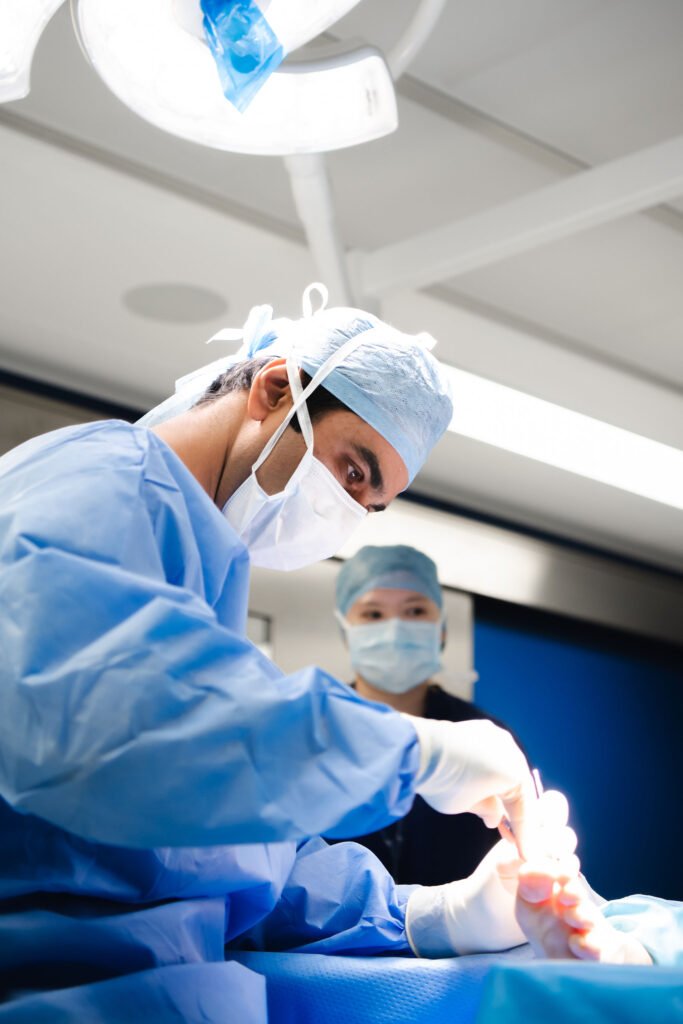
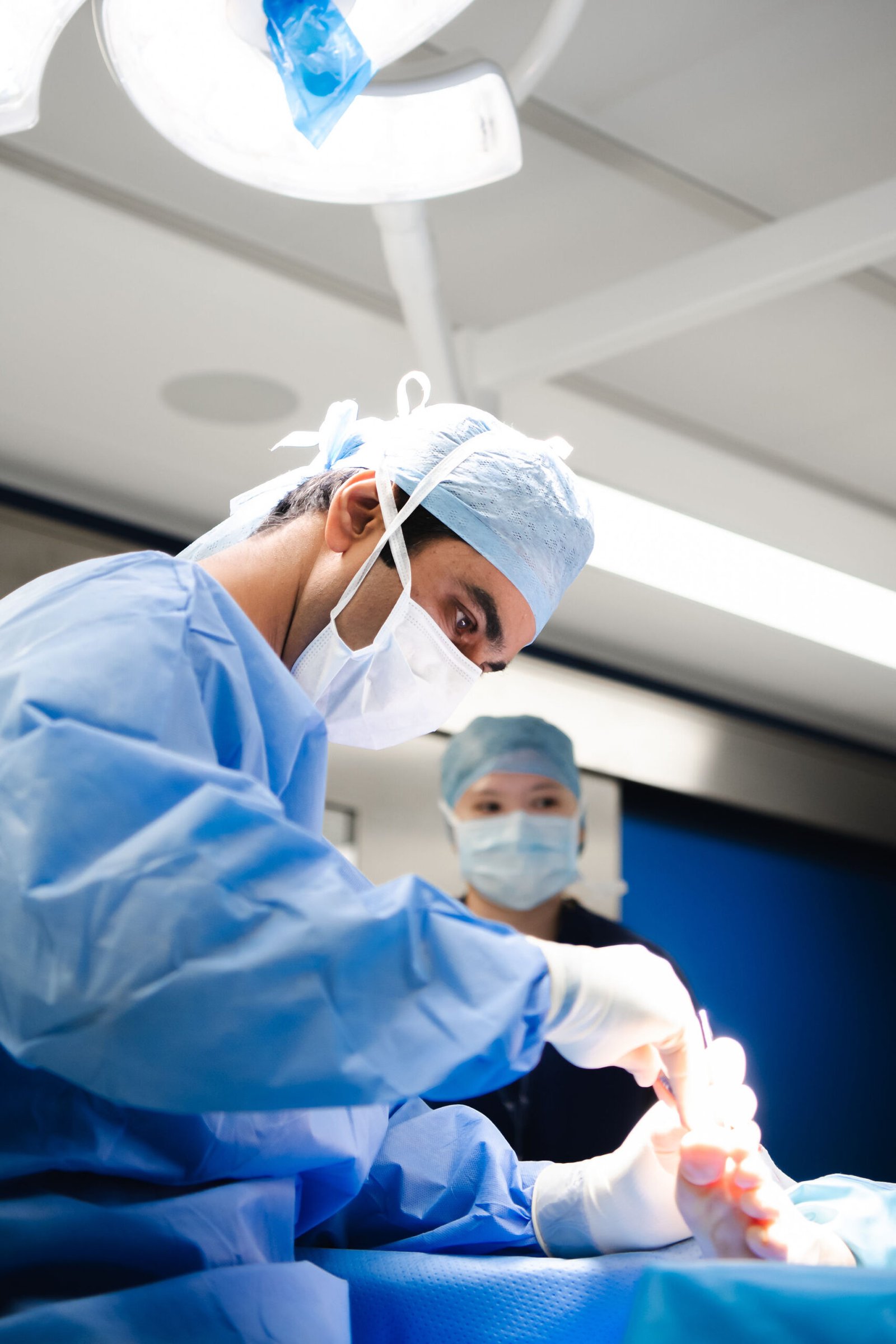
Scarf and Akin osteotomy is a well-established form of bunion surgery that cuts and repositions the metatarsal bone (Scarf) alongside a smaller cut in the toe bone itself (Akin) to straighten the big toe and correct the underlying deformity. It is considered a standard surgical option for moderate bunions and typically delivers stable, predictable results when post-operative advice is followed. Patients weighing up this procedure alongside Mr Nazir’s minimally invasive Rapid Bunion™ protocol (his trademarked keyhole bunion correction technique) can find a full breakdown of all the main techniques in Bunion Surgery Techniques Explained: Keyhole, Scarf/Akin, Lapidus & More.
Understanding the Procedure
What is a Scarf and Akin osteotomy?
A Scarf osteotomy is a surgical cut made in the metatarsal bone (the long bone behind the big toe) that allows the surgeon to shift and realign the bone before securing it in its corrected position. It is frequently combined with an Akin osteotomy, a smaller cut made in the phalanx (the toe bone itself) to straighten the tip of the toe. Together, these two procedures are one of the most widely used approaches to bunion correction, chosen because they restore normal foot mechanics, preserve good movement in the big toe joint, and carry low rates of the bunion returning.
What happens during the surgery, step by step?
The procedure takes place across five stages. First, tight ligaments on the outer side of the bunion are released. The bony prominence of the bunion is then shaved down. The metatarsal bone is cut, the joint is realigned, and it is fixed in place with screws. A small wedge is then removed from the toe bone (the Akin osteotomy) to straighten the toe’s alignment, and the two cut ends of the phalanx are fixed together where the wedge was removed. Access to the joint is achieved through a small incision on the side of the affected toe, exposing the proximal phalanx and the first metatarsal.
Will screws or metal implants be left in my foot permanently?
Yes, and this is a normal and permanent part of the fixation. Titanium screws are used to secure the realigned bone, providing stability while the bone heals. None of the implants used to fix the bones in place need to be removed afterwards, so a second surgery to take out hardware is not required.
Outcomes and Success Rates
Is a Scarf and Akin osteotomy actually effective?
Published outcome data supports this as a reliably successful procedure when recovery guidance is followed. Studies have found that 94% of patients were satisfied with their surgical outcomes, 96% reported feeling better than they did before surgery, 92% experienced no restrictions on activity after recovery, and 86% had no restrictions on the footwear they could wear. These figures make Scarf and Akin one of the more evidence-backed traditional approaches to bunion correction, which is part of why it remains a standard option in many parts of the world.
What does “success” mean in practical terms for a patient?
Beyond satisfaction scores, success is generally measured by removal of the bony bump, correction of the hallux valgus deformity (the medical term for the sideways deviation of the big toe that defines a bunion), and a foot that is both pain-free and cosmetically improved. Because the joint’s own motion is preserved rather than fused, most patients regain normal use of the big toe joint once healing is complete.
Is this the right procedure for everyone with a bunion?
Not necessarily. Deciding whether surgery is appropriate, and which type, depends on a combination of factors including the severity of symptoms, how much the bunion affects daily activities and quality of life, the personal context of how the bunion impacts the individual, and any other health conditions that might affect eligibility for surgery. For bunions involving instability or excessive movement at the base of the metatarsal (known as hypermobility), a Lapidus procedure, which fuses the arch bone, is generally considered a more suitable option than Scarf and Akin. This is why an individual assessment with a specialist is the appropriate starting point rather than self-selecting a procedure type.
Recovery and Practical Expectations
How visible will the scars be?
Each incision used in the procedure is only a 8-10cm long, and scarring is typically resolves within 6 to 12 months of surgery. This is a realistic timeframe rather than a guarantee, and individual healing varies.
When can I get back into normal shoes?
Most patients can wear trainers again at around 3 to 4 weeks after surgery, progressing to closed, everyday shoes by 6 to 8 weeks. This timeline reflects the bone-healing process following the metatarsal cut, and patients should follow their surgeon’s individual guidance on weight-bearing and activity during this period.
Common Questions and Misconceptions
Is Scarf and Akin osteotomy the same as keyhole bunion surgery?
No. Scarf and Akin osteotomy, as traditionally performed, is a distinct technique from minimally invasive or keyhole approaches. It is one of several established surgical options a specialist may consider alongside alternatives such as a Lapidus procedure or a minimally invasive protocol like Rapid Bunion™. Patients researching their options should understand that “bunion surgery” is not a single operation. It is a category of procedures, and the right choice depends on the type and severity of the deformity.
What other surgical options exist besides Scarf and Akin?
Traditional bunion surgery more broadly includes several recognised procedures: exostectomy, which removes the bony prominence without cutting the metatarsal; osteotomy techniques such as Scarf and Akin, which cut and reposition the bone; and the Lapidus procedure, which fuses the joint at the base of the metatarsal to correct more unstable deformities. Patients considering surgery are advised to review how minimally invasive approaches compare to these traditional open techniques before deciding on a pathway.
Do I need a large incision for this type of surgery?
Access for a Scarf and Akin procedure is generally achieved through a larger incision on the side of the toe to expose the relevant bones. Patients concerned about incision size, scarring, or recovery speed compared with keyhole alternatives are encouraged to discuss both options directly with a specialist before committing to a procedure.
How do I know if I’m a good candidate for this procedure or an alternative?
Candidacy depends on an individual clinical assessment covering symptom severity, daily impact, and overall health, alongside imaging to determine the specific pattern of the deformity. Because factors such as joint hypermobility can steer the recommendation toward a different procedure such as Lapidus fusion, a formal consultation and examination is the only reliable way to establish which technique offers the best outcome for a specific foot.
Next Steps
Choosing between Scarf and Akin osteotomy, a Lapidus procedure, and Mr Nazir’s minimally invasive Rapid Bunion™ protocol depends on the specific pattern and severity of the bunion deformity, not on preference alone. Patients weighing their options are encouraged to book a consultation with Mr Nazir to find out which approach is best suited to their case.