Non-surgical options, including orthotics, taping, toe spacers and suitable footwear, can help manage symptoms and slow the progression of the deformity, but they do not correct the underlying structural bone deformity once it has developed. For patients who want to understand when conservative treatments are enough and when it’s time to consider surgery, this page answers the most common questions. For a full overview of the condition, see Do You Need Bunion Surgery? Causes, Non-Surgical Care & Risks.
Understanding what conservative treatments can (and can’t) do
Can non-surgical treatments cure a bunion?
No, non-surgical treatments don’t correct the structural bone deformity. Because bunions are often genetic in origin, conservative treatments can slow their progression but can’t prevent or reverse it once it has started. As Mr Nazir explains, surgery remains the only established method of actually correcting the deformity. Non-surgical treatments can still improve symptoms, comfort and foot function, and it’s an important distinction for patients to understand before choosing a treatment path.
Can a bunion heal on its own without surgery?
No. According to Mr Nazir, a bunion is a progressive condition that slowly worsens over time, and the honest answer to whether it can heal without surgery is no. It’s possible to slow symptoms by wearing wider, more supportive shoes, or by using orthotics or insoles, but this doesn’t stop the structural progression of the deformity.
What’s the most common misconception about non-surgical treatments?
The most common misconception is thinking conservative treatments can “correct” a bunion. In reality, these treatments only address symptoms and foot function, not the underlying bone deformity. Understanding this distinction helps patients set realistic expectations from the start, avoiding delaying a specialist assessment based on only temporary symptom improvement.
Footwear and orthotics
What kind of footwear helps manage bunion symptoms?
Footwear with good support, soft on top but with a rigid sole and good arch support, is generally recommended by Mr Nazir as a first conservative step. For runners or those who exercise, it can help to go up half a size, or for women, to try men’s shoes, which tend to have a wider toe box. Seamless socks can also protect the bunion area during longer workouts.
Do orthotics or insoles actually work?
Orthotics and insoles can improve foot support and reduce pressure through the big toe joint, but they don’t eliminate the bunion. They can help some patients manage symptoms by improving pressure distribution across the foot. A podiatrist can carry out a gait analysis to identify any movement inefficiencies and develop a prescription for custom orthotics suited to the specific foot type. In some cases, custom orthotics can be a lasting solution for symptom management, even though they can’t remove the structural problem causing the deformity.
Can orthotics slow down the worsening of a bunion?
Yes, to some extent. Better arch support helps distribute pressure more evenly and prevents excessive load concentrating on the first metatarsal. Since flat feet are associated with bunion development, better arch support can reduce the rate of progression of the deformity in some patients. However, this effect relates to the pace of progression, not to eliminating the underlying structural cause.
Pads, splints and protection
Are bunion pads useful?
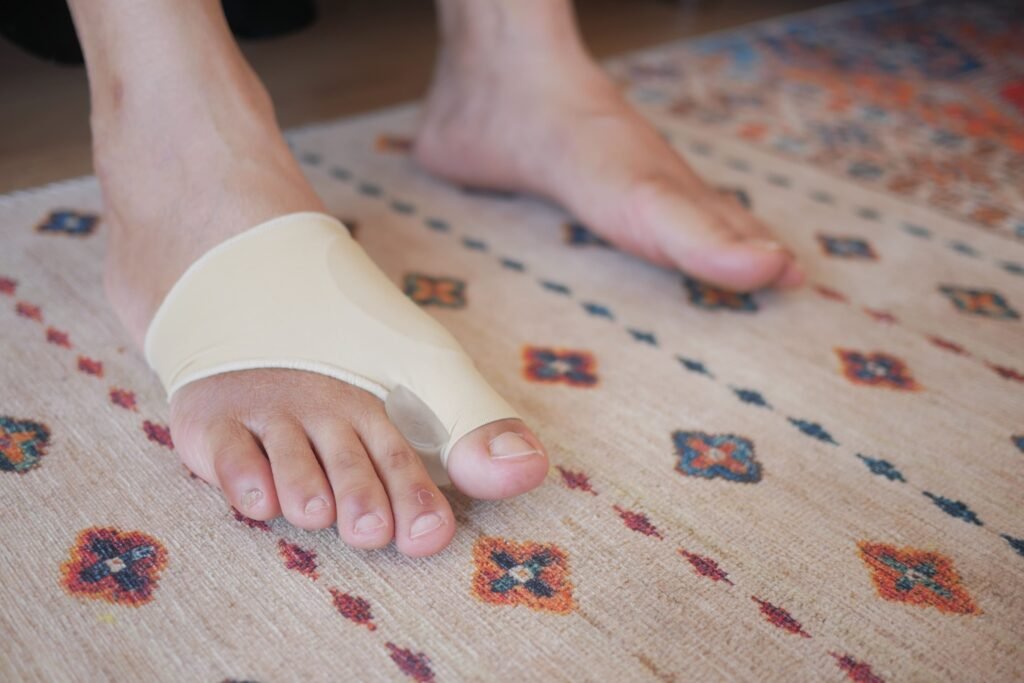
Pads can help reduce friction between the bunion and the shoe, but they don’t work for everyone. In some shoes, adding a pad reduces the available space inside the shoe, which can actually increase pressure on the area. They’re generally more useful when worn with shoes that already offer enough room; it’s worth checking that your shoes already have adequate volume in the forefoot area before buying them.
Can night splints correct the deformity?
Splints may have a role only in the very early, still-flexible stages of the deformity, particularly when used without shoes. Once the bunion becomes stiffer or more structural, splints are unlikely to correct the deformity and can even further irritate the joint. They’re therefore not a suitable solution for moderate or advanced deformities.
Toe spacers and taping
Do toe spacers really help with bunions?
They’re generally not recommended by Mr Nazir. While the idea of placing a spacer between the first and second toe might seem logical, it can actually cause further problems. A spacer risks pushing the second toe outward and reducing the overall space available inside the shoe, increasing pressure, friction and discomfort, especially if the shoes are already tight. Mr Nazir also notes that spacers create an unnatural gap between the big toe and second toe, push the lesser toes away from the rest of the foot, and can worsen problems at the big toe joint. They also block the joint’s natural movement during walking, preventing proper use of the big toe through the gait cycle, which can cause other problems.
Can spacers be useful in any cases?
They can offer temporary relief for some patients, but should be used with caution, and shouldn’t be expected to correct a structural deformity. They are not recommended as a primary long-term management strategy.
Exercises and foot stabilisation
Can foot exercises correct a bunion?
In people with very flexible feet, exercises can help stabilise the foot as a whole, particularly where there is intrinsic muscle weakness and a foot that tends to splay. They can strengthen the arch and improve overall foot stability, but the scientific evidence supporting this remains very limited. If the deformity is significant, exercises are unlikely to produce long-term benefits.
What concrete benefits do foot exercises offer?
Intrinsic foot exercises have been shown to help overall foot function and stability, and shouldn’t be dismissed outright. They can contribute to:
-
foot strength
-
arch support
-
balance
-
stability
-
overall foot function
-
symptom control in flexible feet
Exercises are unlikely to reverse a moderate or severe bunion, but they can still be useful as part of a broader conservative treatment plan.
When to consider a specialist assessment
When does it make sense to move from conservative treatment to a surgical assessment?
If symptoms persist despite suitable footwear, orthotics and other conservative measures, or if the deformity continues to progress, it’s worth discussing options with a specialist. Since surgery remains the only established method of structurally correcting the deformity, understanding early on whether your case is suited to a minimally invasive approach can help avoid prolonged worsening of symptoms. Rapid Bunion™, the minimally invasive bunion correction protocol developed by Mr Nazir, realigns the bone through small incisions and is designed for patients who have already tried conservative options without lasting results.
What’s the recommended next step?
Anyone noticing progression of the deformity despite conservative measures, or who simply wants to understand what stage their bunion is at, can book a consultation with Mr Nazir to discuss whether Rapid Bunion™ is a suitable option.
Book a consultation with Mr Nazir to discuss whether Rapid Bunion™ is right for you.