By Mr Kaser Nazir, Consultant Podiatric Surgeon.
Recovery from minimally invasive bunion surgery follows a fairly predictable pattern, even though the exact pace varies from patient to patient. This guide sets out what typically happens on Day 1, through Week 1, at the Week 6 mark, and by Week 16, so that patients planning time off work, childcare or travel can map their own logistics against real clinical milestones rather than vague reassurances. It also explains why Mr Nazir’s Rapid Bunion™ protocol, his trademarked minimally invasive bunion correction protocol, is built around early, protected weight-bearing rather than prolonged bed rest.
The timeline below applies to minimally invasive (keyhole) bunion correction, where the bone is realigned through small incisions rather than the larger open incision used in traditional bunion surgery. Because the soft tissue disruption is smaller, patients are generally able to start walking sooner than with open surgery, while bone healing itself still follows the same underlying biology.
Prerequisites: What to Arrange Before Surgery
-
Confirm with Mr Nazir whether one foot or both feet will be operated on, since this materially changes the early recovery logistics
-
Arrange time off work: at minimum the first one to two weeks, more if both feet are being treated at once
-
Organise help at home for the first week if having both feet done, since mobility is more limited during this period
-
Have a post-operative shoe or protective boot ready, as this is typically worn for up to four weeks
-
Consider the season: summer allows open-toe footwear if swelling persists, while winter suits patients happy to stay indoors during initial recovery
-
Discuss overall fitness and health with Mr Nazir beforehand, as being in good general health supports a smoother recovery
Step 1: Day 1 (Surgery and Immediate Post-Operative Care)
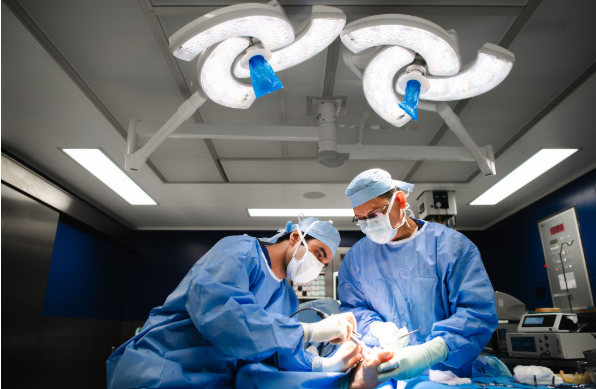
Bunion correction under the Rapid Bunion™ protocol can be performed under local anaesthetic, whether one foot or both feet are treated. On the day of surgery itself, the priority is elevation and rest rather than activity.
-
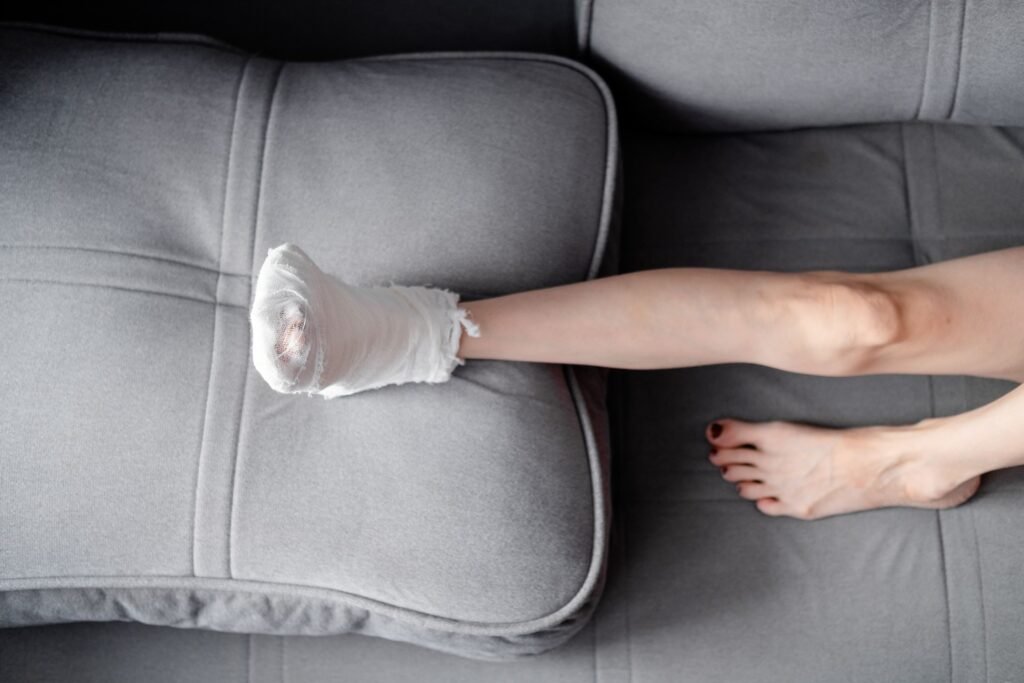
Weight-bearing: Patients are generally permitted to walk on the operated foot from Day 1, but strictly in short bursts, no more than around 10 minutes per hour during this early phase. This is a defining feature of the “walk sooner” approach: patients are not confined to bed, but movement is deliberately rationed to protect the surgical correction while it begins to settle.
-
Footwear: Patients wear a protective post-operative shoe or boot from the outset, continuing to use it for the first phase of recovery.
-
One foot vs both feet: If only one foot has been operated on, mobility on the other, untreated foot remains normal, which keeps the patient considerably more independent at home from Day 1. If both feet are treated in the same session, the patient should expect to be significantly less mobile and will need more support with everyday tasks such as cooking and cleaning, particularly across the first seven to ten days.
Note: Mr Nazir tends to favour one foot over the other during use in the early days, so it is common and expected for one foot to feel a little more sore than the other during the healing stage.
Step 2: Week 1 (Early Mobilisation and Return Towards Normal Activity)
The first week is when the difference between unilateral (one foot) and bilateral (both feet) surgery becomes most apparent in day-to-day terms.
-
Unilateral surgery: Patients having one foot operated on are typically able to return to outdoor activity and commuting to work after around five to seven days, provided they remain in a protective boot. Walking during this period is still limited to short intervals of five to ten minutes per hour before activity can be gradually increased.
-
Bilateral surgery: Patients having both feet operated on at the same time should expect roughly two weeks of much more limited mobility, needing extra support at home and generally working from home for three to four weeks in total.
-
Pain and swelling: Some post-operative discomfort is expected in the operated foot or feet during this period, and swelling begins its long, gradual decline, though it will not fully resolve for several months yet.
Sub-steps for planning Week 1:
-
If commuting by public transport or driving, factor in that a protective boot will still be worn.
-
If working from home is possible, this significantly widens the options for scheduling surgery around a busy work calendar.
-
If bilateral surgery has been chosen, arrange for someone to assist with household tasks for at least the first one to two weeks.
Step 3: Weeks 2 to 4 (Gradual Increase in Activity)
Between roughly weeks two and four, activity levels are gradually increased under guidance, though the post-operative shoe generally remains in use throughout this window.
-
Some patients are able to move into a trainer at around two weeks, while others need longer before this feels comfortable, and this varies by individual and by how much surgery was performed.
-
Bilateral-surgery patients often find it takes three to four weeks before they feel ready to get into a trainer and resume commuting to work, reflecting the more significant early restriction of having both feet treated together.
-
Running and other high-impact activity remain off-limits throughout this stage, and this restriction holds firm until eight weeks post-operatively regardless of how well the foot feels.
Warning: Returning to closed, structured footwear too early, before swelling and healing have progressed enough, can be uncomfortable and is generally discouraged. Patients are advised to let comfort and clinical guidance, not a fixed calendar date, dictate the exact week they move into normal shoes.
Step 4: Week 6 (Bone Healing Milestone)
Six weeks marks a key clinical checkpoint, though it is the early end of a range rather than a fixed finish line.
-
Total bone healing after minimally invasive bunion correction typically takes six to eight weeks, regardless of whether one foot or both feet were operated on.
-
This means that by Week 6, many patients are approaching the point where the underlying bone correction has consolidated, but full healing may extend a further one to two weeks beyond this.
-
Full return to all high-impact activities is not expected at Week 6; this is generally reserved until the eight-week mark has passed, since running specifically remains restricted until then.
Note: Bone healing time is consistent between unilateral and bilateral surgery: the six-to-eight-week window applies either way. What differs between the two is not how fast the bone heals, but how mobile and independent the patient is allowed to be while that healing takes place.
Step 5: Week 16 (Swelling Resolution and Longer-Term Function)
By around the four-month mark, most of the visible after-effects of surgery have settled, though some patients take slightly longer.
-
Swelling is expected to subside over a three- to four-month period following surgery. Week 16 sits at the far end of this typical window.
-
The clinical aim of the surgery is to restore improved function and structural stability to the foot, rather than to promise it will feel identical in every respect to a foot that never had a bunion.
-
By this stage, patients who followed the graduated return-to-activity timeline should be well established in normal footwear, with running and higher-impact activity resumed since passing the eight-week point.
Tips & Best Practices
-
Plan around the one-foot-versus-two-feet decision early. This single choice affects nearly every other logistical decision, including time off work, help at home and how soon normal footwear returns, more than any other variable in the recovery timeline.
-
Match surgery timing to lifestyle, not just calendar convenience. Some patients prefer summer, when open-toe sandals accommodate swelling without restricting footwear choice; others prefer winter, when they are already inclined to stay indoors. Discuss this directly with Mr Nazir when planning the date.
-
Respect the “10 minutes an hour” guidance in the earliest days. The ability to walk soon after surgery is a genuine feature of minimally invasive technique, but early mobilisation is deliberately rationed, not unrestricted, to protect the correction while it stabilises.
-
Expect asymmetry in comfort if both feet are treated. One foot being more sore than the other during healing is a normal and anticipated part of recovery, related to which foot is more relied upon day to day, not a sign of a problem.
-
Treat “swelling settled” and “bone healed” as separate milestones. Bone healing generally completes within six to eight weeks, but visible swelling can take considerably longer, up to three to four months, to fully resolve. Patients sometimes mistake ongoing swelling for a healing problem when it is, in fact, expected.
-
Ensure good general fitness before surgery. Being in good health beforehand is one of the practical factors that supports a smoother recovery afterward.
Troubleshooting Common Recovery Concerns
“Swelling still visible at eight weeks.” This is normal in most cases. Swelling can take three to four months to fully settle, so some visible puffiness well beyond the six-to-eight-week bone-healing window is expected rather than a cause for concern.
“One foot feels much more painful than the other after bilateral surgery.” This is a recognised pattern, generally related to one foot being favoured more than the other during use while both heal. It does not necessarily indicate a complication, but should still be discussed at follow-up if pain is significant or worsening.
“I want to go back to trainers earlier than advised.” Some patients do move into trainers around the two-week mark, but others need longer, and bilateral-surgery patients typically need three to four weeks before this feels comfortable. Comfort and clinical guidance should determine timing, not a fixed date.
“I’m struggling to stay indoors during the first two weeks.” This is a genuine and common difficulty, particularly with bilateral surgery. For patients who find prolonged indoor rest difficult, Mr Nazir will often recommend splitting the procedure: treating one foot first while remaining mobile, then the second foot later, rather than committing to both feet at once.
Summary
Recovery after Rapid Bunion™ surgery follows a structured timeline: guarded weight-bearing from Day 1, a gradual return to normal footwear and activity across Weeks 1 to 4, bone healing largely complete by Week 6 to 8, and swelling fully settled by around Week 16. The choice between operating on one foot or both feet at the same time is the single biggest factor shaping how mobile and independent a patient will be in the first few weeks, and this should be discussed and planned in detail before surgery. Patients considering the procedure and planning time off work are encouraged to book a consultation with Mr Nazir to map this timeline against their own health, occupation and lifestyle.
Book a consultation with Mr Nazir to discuss your recovery timeline and plan surgery around your own health, occupation and lifestyle.