By Mr Kaser Nazir, Consultant Podiatric Surgeon.
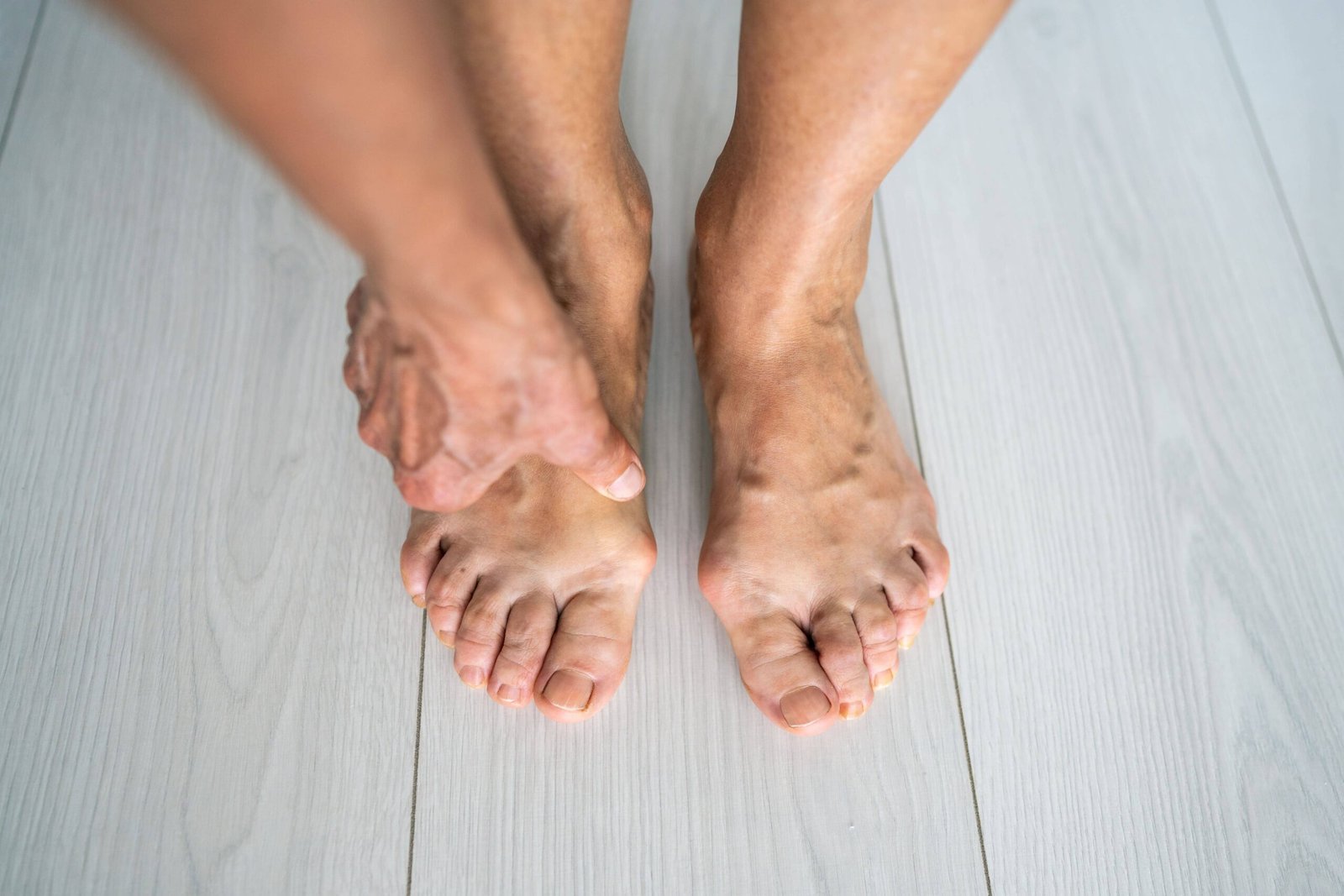
Bunions do not heal without surgery, but they can often be managed for a period with footwear changes, orthotics and activity adjustments, provided the deformity is mild and monitored carefully. Mr Nazir is direct with patients about where conservative care genuinely helps and where it simply delays a decision that surgery will eventually be needed for.
Understanding the Non-Surgical Options
Can a bunion heal without surgery?
No. When asked directly what he tells patients who ask if a bunion can heal without an operation, Mr Nazir is unambiguous: “Bunions are a very progressive condition… And do they heal without surgery? No. Surgery is the only well-established way of fixing bunions”. Non-surgical measures can slow symptoms in some patients, but they do not reverse the underlying bone misalignment.
What conservative treatments actually help manage symptoms?
Footwear adaptation is the foundation of conservative care: a supportive shoe with a soft upper, a rigid sole and good arch support, combined with an off-the-shelf insole or a custom orthotic to support the first metatarsal (the long bone behind the big toe). Mr Nazir recommends this as a first-line approach, in that order, before considering other aids. Bunion sleeves and splints are also used by some patients, though their evidence base is much weaker than footwear and orthotic support.
Do orthotics actually stop a bunion getting worse, or do they just manage pain?
Orthotics work mainly by improving foot mechanics rather than reversing the deformity. Mr Nazir explains they “stabilise the whole foot, so you don’t roll in the first metatarsal, and you distribute pressure more evenly,” and because flat feet are associated with bunion deformity, better arch support can help address that contributing factor. This means orthotics can slow the rate at which symptoms worsen for some patients, but they are a management tool, not a cure.
Do splints work?
The evidence for splints is poor. Mr Nazir notes that splints “may help in the very early stages of bunion deformity, but are very unlikely to help once a bunion is established”. He is explicit that this is one of the most common misconceptions he encounters: “the biggest mistake with conservative treatment is that they read online that splints can fix bunions, and that’s not the case”. Patients researching splints online should treat marketing claims about correction or reversal with caution.
When Conservative Management Has Worked
Has Mr Nazir seen patients successfully manage a bunion without surgery for years?
Yes, but typically only in a specific group. Mr Nazir describes this as “a mixture of the very mild deformities where they started using more appropriate footwear with good arch supports and insoles”. This pattern (mild deformity plus early, consistent footwear correction) is the profile most likely to see long-term symptom control without an operation.
What footwear habits make bunions worse?
Mr Nazir identifies unsupportive footwear as a common driver of symptomatic bunions. “Wearing high heels is not uncommon. I feel that ballerina flats or very unsupportive shoes with no real structure result in bunions becoming symptomatic”. Switching away from these styles, alongside the supportive footwear measures above, is a practical first step for patients in the early stages of discomfort.
When Conservative Care Stops Being Enough
Is there a specific point at which conservative treatment stops working?
The threshold is symptom-based rather than a fixed timeline for most patients. Mr Nazir explains: “if the patient is symptomatic, then there’s an indication for surgical intervention rather than conservative management”. Separately, he has also described six months of conservative management without improvement, alongside progressive pain and deformity, as a point at which surgery becomes indicated. In practice, both signals matter: ongoing symptoms despite footwear and orthotic changes, and visible progression of the deformity, point towards a surgical consultation.
What specific signs suggest surgery should be considered sooner rather than later?
Developing forefoot deformity is a clear signal. Mr Nazir advises that if a patient is “developing forefoot deformity, as in developing hammertoes, or there are abrasions on the lesser toes because of the crowding of the foot, then that’s a good sign to get your bunion deformity addressed”. Waiting until pain interferes with preferred footwear, sport, or daily activity is, in Mr Nazir’s own words, the point at which he would choose to operate if it were his own bunion: “if the bunion lump is stopping me from doing any sports, then I would have it addressed surgically”.
What happens if bunion surgery is delayed too long?
Delaying surgery can allow secondary damage to develop that surgery alone cannot fully reverse. Mr Nazir is clear on this risk: “if you leave it too late, then sometimes you could develop secondary arthritic changes in the joint which cause damage to the cartilage. And in those cases, regardless of whether you fix the bunion, you may be left with some symptoms that remain within the joint itself”. He also notes that a longstanding bunion frequently pushes on the neighbouring toes, leading to hammertoes and a condition called chondrocalcinosis (a build-up of calcium crystals in joint cartilage), because “a bunion has given an ‘eviction notice’ to the second and third toes”.
Does delaying surgery mean a more complicated operation later?
In more advanced cases, yes. Mr Nazir explains that in moderate to severe deformities, a straightforward correction procedure may no longer be sufficient, and patients may instead need a procedure to remove bony prominence, a joint fusion, or a joint replacement. This is a key reason he encourages patients with progressive, symptomatic bunions not to wait indefinitely before seeking a surgical opinion.
Is there an advantage to operating earlier in life rather than waiting?
Younger patients tend to have better bone quality and healing potential, which has changed when Mr Nazir now recommends surgery. He notes that “most of my patients that I operate on are between 30 and 40 years old, rather than in the past where we had to wait until your 60s, usually. The whole treatment protocol has changed now”. Earlier intervention, in appropriate candidates, is intended to prevent further deformity of the foot rather than simply treat an established one.
Making the Decision
Should every patient with a mild bunion go straight to surgery?
No. For very mild deformities, footwear adaptation and orthotic support are a reasonable and evidence-supported starting point, and some patients manage well for years this way. Mr Nazir’s approach is patient-specific: surgery is indicated when symptoms are present and persistent, or when the deformity is progressing, rather than being automatically recommended at diagnosis.
What is the honest, non-surgical takeaway for someone in the early stages of bunion discomfort?
Supportive, structured footwear with good arch support, combined with an orthotic or insole, is an evidence-based way to slow symptoms and protect the joint while a decision is made. Splints and bunion sleeves are unlikely to offer meaningful benefit once a bunion is established, despite their popularity online. Patients should treat symptom progression, forefoot crowding or hammertoe development as a signal to seek a specialist assessment rather than persisting indefinitely with conservative measures alone.
Patients uncertain whether their bunion has reached the point where conservative care is no longer enough can book a consultation with Mr Nazir to have the deformity assessed and discuss whether Rapid Bunion™, Mr Nazir’s trademarked minimally invasive bunion correction protocol, is an appropriate next step.