By Mr Kaser Nazir, Consultant Podiatric Surgeon.
Minimally invasive keyhole bunion surgery, including Mr Kaser Nazir’s Rapid Bunion™ protocol. is the technique associated with same-day walking, because small incisions and rigid screw fixation allow early weight-bearing without the tissue trauma of traditional open surgery. To understand how this compares with older approaches, it helps to first look at Bunion Surgery Techniques Explained: Keyhole, Scarf/Akin, Lapidus & More, which breaks down each technique side by side. The sections below answer the practical questions patients ask about walking, weight-bearing and recovery after keyhole surgery.
What Makes Same-Day Walking Possible
Why can patients walk the same day after keyhole bunion surgery?
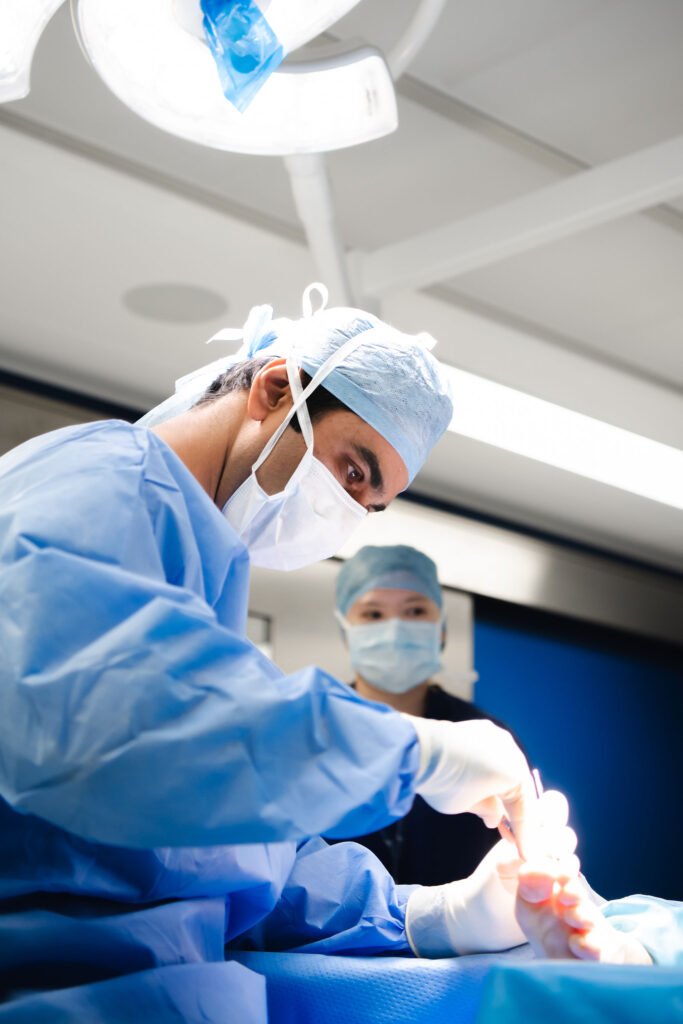
Same-day walking is possible because keyhole surgery involves far less soft tissue disruption than open surgery, which reduces swelling and avoids the wound-healing problems that can delay mobility. Mr Nazir uses live X-ray guidance throughout the procedure, positioning the patient so that each bone cut can be checked and corrected in real time before screws are placed. The rigid screws used in the Rapid Bunion™ protocol hold the corrected bone position securely, even under the stress of standing and walking, which is what allows early weight-bearing to begin safely. This combination of minimal tissue damage and stable internal fixation is the technical basis for the “walk the same day” outcome, rather than any single element alone.
Is keyhole bunion surgery the same as laser bunion surgery?
No. This is a common misconception. There is no proven laser method that can remove a bunion deformity, and lasers can only reduce inflammation around the bony bump rather than correct the underlying bone position. Patients who ask about “laser bunion surgery” are almost always describing keyhole bunion surgery, which corrects the deformity itself by cutting and resetting the bone through small incisions. Anyone considering surgery based on marketing that mentions “laser” removal should clarify with their surgeon exactly which technique is being offered.
How does keyhole surgery compare with traditional open bunion surgery for recovery?
Keyhole bunion surgery is associated with less postoperative pain, less swelling, a lower chance of joint stiffness and a reduced risk of the deformity returning, compared with open surgery. Bone healing takes a similar six to eight weeks in both approaches, but keyhole surgery allows a quicker return to work and daily activity because the initial recovery period involves less pain and swelling. Pain after keyhole surgery typically subsides within two to three days, whereas open surgery may require pain relief for at least a week. Both techniques usually involve screw fixation to hold the corrected bone in place; the key difference lies in how much soft tissue is disrupted to get there. Many patients ask is minimally invasive bunion surgery as effective as open surgery in the long term, and clinical evidence shows it provides comparable correction with the benefit of a faster start to rehabilitation.
Walking and Weight-Bearing: What to Expect Day by Day
Does “walking the same day” mean normal walking straight away?
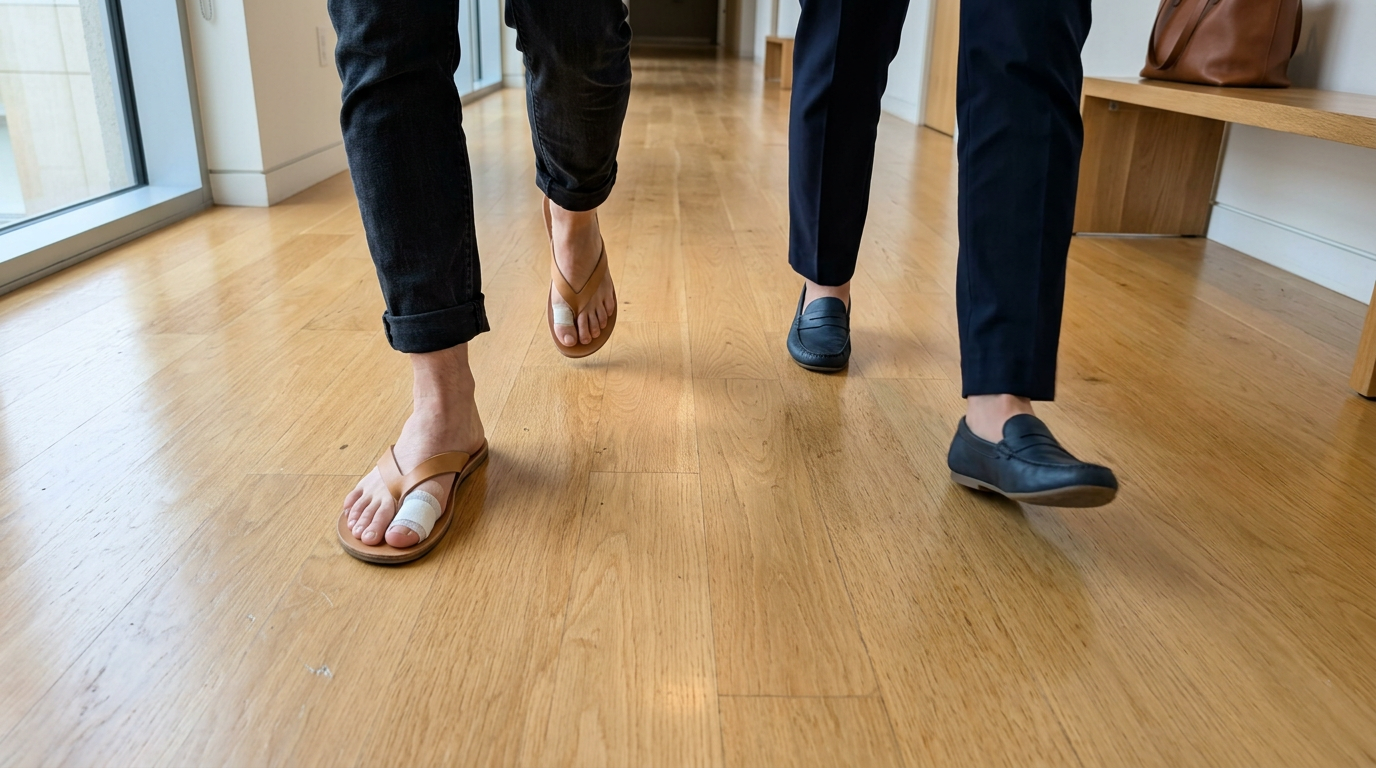
No. Same-day walking refers to the ability to bear weight and mobilise carefully immediately after surgery, not a return to normal, unrestricted walking. In the first two weeks, patients are advised to mobilise cautiously and put weight on the foot for no more than ten minutes per hour. Activity can be gradually increased between weeks two and four, though a postoperative shoe is typically worn for up to four weeks. This graded approach protects the surgical correction while still allowing far earlier mobility than open surgery traditionally permits.
When can patients get back into normal shoes or trainers?
A small number of patients return to trainers at around two weeks, but most need several weeks before footwear and commuting feel comfortable, depending on swelling. Running is not permitted until at least eight weeks after surgery, regardless of how quickly early mobility progresses. Anyone eager to resume sport or high-impact activity should treat this eight-week point as a firm minimum, not a target to beat.
How long does full recovery take, including swelling?
Initial recovery for bone healing takes six to eight weeks, although mobility is significantly more limited during the first three to four weeks. Swelling itself can take three to four months to fully settle, even once the patient is walking comfortably and back in normal footwear. Patients should expect a difference between “walking again” (days), “back in normal shoes” (weeks) and “swelling fully resolved” (months); these are three distinct milestones, not one recovery point. For a more detailed breakdown of these stages, you can read about how long it takes to recover from bunion surgery to help plan your time off work.
Bilateral Surgery and Individual Circumstances
Can both feet be treated at the same time and still allow early walking?
Yes. Minimally invasive surgery allows both feet to be corrected in the same procedure (bilateral surgery), which is one of the outcome advantages over older open techniques. Whether one foot or both are treated depends on patient circumstances: those who choose to have both feet done in one episode will need more support at home and should plan to work from home for three to four weeks, whereas treating one foot at a time allows mobility again after five to seven days. Patients who struggle with reduced mobility indoors are often advised to split treatment across two separate procedures rather than have both feet done together. This is a conversation worth having directly during consultation, since lifestyle and home support matter as much as the surgical technique itself.
Why might one foot feel more sore than the other after bilateral surgery?
When both feet are operated on together, patients often notice that one foot feels more sore than the other during healing, because there is a natural tendency to favour one foot over the other while mobilising. This is an expected part of the bilateral recovery process rather than a sign that something has gone wrong. Following the surgeon’s guidance on weight distribution in the early weeks helps manage this imbalance.
Does the technique or timing of surgery affect how quickly someone can walk?
The surgical technique has more bearing on early mobility than the time of year surgery is performed, though timing affects comfort and lifestyle around the recovery period. For example, summer surgery allows swollen feet to be accommodated in open sandals without the restriction of closed footwear, while winter surgery may suit patients who prefer to stay indoors during poor weather. Whatever the season, the same graded weight-bearing protocol applies: cautious mobilisation in week one to two, increasing activity through week four, and no running before eight weeks.
Choosing the Right Approach
Is keyhole surgery suitable for everyone?
Not necessarily. Keyhole surgery is suitable for most patients with good bone quality, but open surgery techniques may be more appropriate for those with significant pre-existing arthritis or particularly soft bone. The right procedure depends on the individual patient, the type of bunion and the size of the deformity, which is why a consultation including X-rays and a physical foot examination is necessary before any recommendation is made. Most patients considering bunion correction are candidates for keyhole surgery, but this should always be confirmed on an individual basis rather than assumed.
Will the foot function normally after surgery?
The goal of bunion surgery is to return the foot to improved function and structural stability, correcting the misalignment between the metatarsal bone and the big toe. Bunions themselves do not resolve on their own; the underlying deformity progresses over time as the metatarsal and big toe continue to deviate in opposite directions. Addressing this misalignment surgically, rather than relying on bunion correctors or splints, is the only way to correct the deformity itself.
What is the next step for someone considering keyhole bunion surgery for faster recovery?
The most reliable next step is a consultation with a bunion specialist, including X-rays and a foot examination, to establish whether keyhole surgery or an alternative technique is the right fit for the specific deformity. Patients should use this consultation to ask directly about expected weight-bearing timelines, whether one or both feet are suitable for same-session treatment, and what recovery will look like given their work and lifestyle demands. Book a consultation with Mr Nazir to discuss whether Rapid Bunion™ is the right option for a same-day walking recovery.