Tailor’s Bunion Surgery in London: How Keyhole Bunionette Correction Works
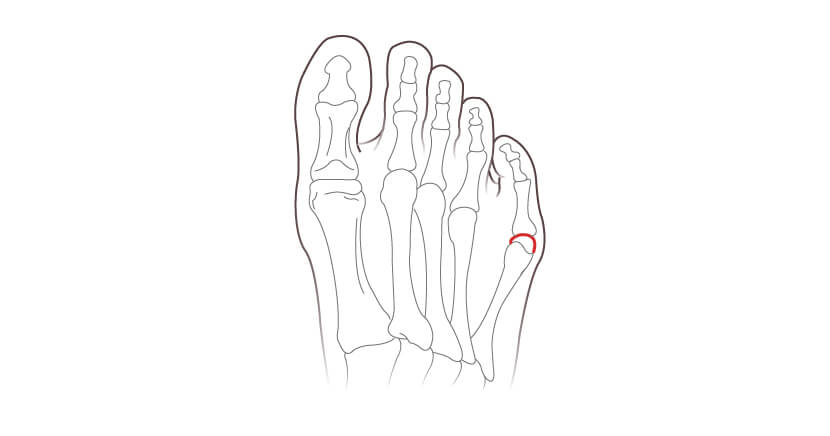
A tailor’s bunion, also known as a bunionette, is often described as a “small bunion” on the outside of the foot. Instead of affecting the big toe joint, like a standard bunion, it develops around the base of the little toe, near the fifth metatarsal.
For some people, a tailor’s bunion is mainly a cosmetic concern. For others, it becomes painful, irritated, red, swollen, and difficult to manage in normal footwear. Shoes may rub against the outside of the foot, the little toe may start to move inwards, and the foot may feel wider or more difficult to fit comfortably into shoes.
At London Foot & Ankle Surgery in Harley Street, London, Mr Kaser Nazir and his team treat a wide range of foot and ankle conditions, including tailor’s bunions, standard bunions, flat feet, hammertoes, heel pain, Morton’s neuroma, ingrown toenails, plantar plate injuries and other forefoot problems.
This article explains what a tailor’s bunion is, why it can become painful, what non-surgical options may help, and how minimally invasive tailor’s bunion surgery is performed.
What is a tailor’s bunion?
A tailor’s bunion is a bony prominence on the outer side of the foot, just below the little toe. It is sometimes called a bunionette because it is similar to a bunion, but smaller and located on the opposite side of the foot.
A standard bunion usually affects the big toe joint. A tailor’s bunion affects the fifth metatarsal, which is the long bone leading to the little toe.
The condition can develop when the fifth metatarsal bone becomes more prominent, bows outwards, or sits in a position that creates extra width across the forefoot. Over time, this can cause the little toe to drift inwards and the outside of the foot to become irritated.
The name “tailor’s bunion” comes from the old sitting posture of tailors, who would often sit cross-legged for long periods, placing pressure on the outside of the foot. Today, the problem is more commonly associated with foot structure, footwear pressure and irritation around the fifth metatarsal head.
Common symptoms of a tailor’s bunion
A tailor’s bunion does not always cause symptoms. Some people notice a bump on the outside of the foot but have little or no pain.
However, when symptoms do develop, they may include:
- A visible bump on the outside of the foot near the little toe
- Pain when wearing shoes
- Redness or swelling over the bony prominence
- Rubbing, pressure or skin irritation
- A feeling that the forefoot is becoming wider
- The little toe moving towards the other toes
- Difficulty finding comfortable footwear
- Pain during walking, sport or prolonged standing
- Corns, callus or bursitis over the outside of the foot
The pain is often caused by pressure from footwear. Tight, narrow or stiff shoes may not directly cause the deformity, but they can make the symptoms worse by rubbing against the prominent bone.
What causes a tailor’s bunion?
There is not always one single cause. In many cases, a tailor’s bunion is related to the shape and mechanics of the foot.
Possible contributing factors include:
- The fifth metatarsal bone bowing outwards
- Splaying of the metatarsal bones
- A bony prominence or spur on the outside of the foot
- Inherited foot structure
- Pressure from narrow footwear
- Repeated irritation over the outside of the little toe joint
- Biomechanical imbalance in the foot
The key point is this: if the bone shape or position is the main reason for the problem, padding and footwear changes may reduce irritation, but they may not fully correct the underlying deformity.
Do all tailor’s bunions need surgery?
No. Surgery is usually considered only when symptoms continue despite conservative treatment, or when the deformity is painful enough to interfere with daily life, footwear, work or activity.
Non-surgical options may include:
- Wider shoes with a deeper toe box
- Avoiding narrow or pointed footwear
- Padding over the bunionette
- Bespoke orthotics or insoles
- Anti-inflammatory medication where appropriate
- Steroid injection if bursitis develops
- Activity modification
- Professional assessment of foot mechanics
These options can be very helpful, especially for mild symptoms. But if the pain keeps returning, footwear becomes increasingly difficult, or the bunionette continues to cause irritation, surgery may be advised. It is important to note that a Tailor’s bunion can not be fixed without surgery.
What is a tailor’s bunion surgery?
Tailor’s bunion surgery is designed to correct the bony prominence on the outside of the foot and reduce the width of the forefoot.
A common surgical method is a fifth metatarsal osteotomy. “Osteotomy” means the bone is carefully cut and repositioned. In this case, the fifth metatarsal is corrected so the outside of the foot becomes narrower and the little toe sits in a better position.
In Mr Kaser Nazir’s minimally invasive approach, the correction is performed through tiny entry points rather than a large open incision. The bone is cut using specialist instruments, moved into a better position, checked carefully using X-ray imaging, and then stabilised with titanium screw fixation.
The aim is to correct the deformity while reducing soft tissue disruption, which may help with early mobilisation, less swelling and a smoother recovery when compared with more invasive approaches.

How the keyhole tailor’s bunion procedure works step by step
In the surgical video, Mr Kaser Nazir demonstrates a minimally invasive operation for a tailor’s bunionette. The procedure is performed with X-ray guidance throughout, allowing the position of the bone, wire and screws to be checked repeatedly.
Here is a simplified step-by-step explanation.
1. The fifth metatarsal is identified
The surgeon locates the fifth metatarsal, which is the bone connected to the little toe. This is the bone responsible for the prominence on the outside of the foot.
X-ray imaging is used during the operation to confirm the anatomy and guide the correction.
2. A guide wire is placed
A wire is placed into the fifth metatarsal. This helps guide the position of the screw and ensures the correction is performed accurately.
The position is checked multiple times under X-ray before the next stage begins.
3. Tiny entry points are made
Instead of a large open incision, the procedure is performed through very small entry points.
In the video, Mr Nazir explains that one incision may be no more than approximately two millimetres, with another small entry point used for screw placement. This is why the operation is often described as minimally invasive or keyhole surgery.
4. The bone is carefully cut
A specialist burr is introduced through the small entry point. The burr is used to make a precise cut in the fifth metatarsal.
A water jet is used to cool the bone while the cut is made, and X-ray imaging is used to confirm that the cut is in the correct place.
5. The bone is moved into a better position
Once the bone is cut, the metatarsal can be shifted to reduce the width of the foot and straighten the alignment of the little toe.
This is a key part of the procedure. The goal is not simply to shave off a bump. The aim is to correct the shape and position of the bone causing the bunionette.
6. The correction is checked carefully
The position is checked again and again on X-ray. Mr Nazir explains in the video that there is no substitute for checking enough to make sure the deformity has been properly corrected.
The surgeon checks that the fifth toe is straighter, that the bump has been reduced, and that the bone position is stable.
7. Titanium screws are inserted
Once the bone has been moved into its corrected position, titanium screws are inserted to hold the bone securely while it heals.
These screws sit within the bone and do not usually need to be removed. In only a small number of cases would removal be considered.
8. The wound is washed and closed
The tiny wounds are washed out to remove any bone debris that could contribute to inflammation.
Small stitches may be used. These may be absorbable or removed after approximately two weeks, depending on the case.
9. A dressing and compression bandage are applied
A dressing is placed over the foot to protect it. A compression bandage is usually applied and may stay in place for the first several days, or longer depending on patient comfort and the surgeon’s advice.
To learn more or book an appointment, contact us here.
What are the benefits of minimally invasive tailor’s bunion surgery?
The main benefit is that the procedure is designed to correct the underlying bony deformity through very small entry points.
Potential benefits may include:
- Tiny entry points rather than a large open incision
- Correction of the fifth metatarsal position
- Reduction of the bony bump on the outside of the foot
- A narrower forefoot shape
- Early mobilisation after surgery
- Walking in a post-operative shoe soon after the procedure
- Less soft tissue disruption
- Less swelling in suitable cases
- Minimal post-operative discomfort for many patients
- Reduced risk of wound problems compared with larger incisions
- No hospital admission required in many cases
- No GP referral usually necessary for private consultation. If you are using medical insurance your insurance may require a referral.
- Finance options are available
- Treatment in Harley Street, London
It is important to be accurate here. “Walk immediately” does not mean walking normally without limits. In the early recovery period, walking is usually controlled and restricted. In the surgical explanation, Mr Nazir describes walking straight away in a post-operative shoe, but limiting walking during the first few days and gradually increasing activity as healing progresses.
That distinction matters. The goal is early protected mobilisation, not ignoring the recovery process.
Will I need general anaesthetic?
This depends on the individual patient, the surgical plan and the anaesthetic advice given before treatment.
Many minimally invasive foot procedures can be performed under local anaesthetic, sometimes with sedation depending on the patient and clinical situation. The final anaesthetic plan should always be discussed directly with the surgeon and anaesthetic team.
For marketing and patient education, the safest wording is: “The procedure may be performed under local anaesthetic, with sedation options discussed where appropriate.”
Can you walk after a tailor’s bunion surgery?
In many cases, patients can walk shortly after surgery in a post-operative shoe. However, this does not mean unrestricted walking.
Early walking is usually limited and carefully managed. In the video, Mr Nazir explains that walking may be restricted to short periods initially, for example around ten minutes per hour in the first few days, before gradually increasing.
Patients are usually advised to elevate, rest, protect the foot and follow the post-operative plan carefully. This helps reduce swelling and supports bone healing.
How painful is a tailor’s bunion surgery?
Pain varies from patient to patient, but one of the advantages of minimally invasive surgery is that it aims to reduce soft tissue trauma.
In the video, Mr Nazir explains that he expects very little post-operative pain because the procedure is done through keyhole entry points and the tissues are not stripped in the same way as with more invasive surgery.
Some patients may need painkillers for one or two days. Others may need little or no pain relief. However, this should always be discussed individually, because pain experience, swelling, health status and recovery can vary.
How long does recovery take?
Recovery depends on the severity of the deformity, the exact procedure performed, the patient’s general health, footwear needs, occupation and activity level.
The London Foot & Ankle Surgery website notes that recovery following tailor’s bunion surgery may take around 6–8 weeks, with return to more strenuous activity, such as sport, around 3 months in many cases. Return to work can vary depending on how active the job is, and driving may typically be around 6 weeks, subject to individual advice and safe control of the vehicle.
In simple terms:
- Early phase: rest, elevation, dressing care and protected walking
- First few weeks: controlled mobilisation and swelling management
- 6–8 weeks: many patients are progressing well with recovery
- Around 3 months: return to more strenuous activity may be possible in suitable cases
This is general guidance only. The exact timeline should be confirmed during consultation.
Who may be suitable for tailor’s bunion surgery?
You may be suitable for assessment if you have:
- Ongoing pain on the outside of the foot
- A visible bump near the little toe
- Difficulty wearing shoes
- Redness, swelling or rubbing over the bunionette
- A little toe that is moving inwards
- Symptoms that have not improved with wider shoes, padding or orthotics
- Pain that affects walking, work, sport or daily life
A consultation is important because not every painful little toe joint is a tailor’s bunion. Other conditions can also cause pain in this area, including bursitis, arthritis, stress injuries, corns, callus, nerve irritation or other forefoot problems.

Why choose a specialist foot and ankle team?
Tailor’s bunion surgery is a precise procedure. It involves correcting the fifth metatarsal, checking alignment, stabilising the bone and managing recovery carefully.
A specialist foot and ankle team can assess the whole foot, not just the visible bump. That matters because tailor’s bunions can be linked to wider foot structure, toe alignment and biomechanics.
Mr Kaser Nazir and the London Foot & Ankle Surgery team offer assessment and treatment for tailor’s bunions as part of a broader foot and ankle service. The clinic also treats many other conditions, including bunions, flat feet, hammertoes, heel pain, ingrown toenails, Morton’s neuroma, plantar plate injuries and other surgical and non-surgical foot problems.
Book a consultation
If you have a painful bump on the outside of your foot near the little toe, or you have been told you may have a tailor’s bunion or bunionette, a specialist assessment can help you understand your options.
Conservative treatment may be enough for some patients. For others, minimally invasive tailor’s bunion surgery may offer a way to correct the underlying deformity, reduce irritation and help you return to more comfortable walking and footwear.