Bunion pain can be frustrating at any time of day, but many people notice that their symptoms feel worse in the evening or at night.
You may get through the day in work shoes, trainers, formal footwear or safety boots, only to find that once you finally sit down or go to bed, the bunion starts throbbing, aching or burning.
For some patients, the discomfort settles by the morning, but then the same pattern starts again the next day.
So why does bunion pain often feel worse at night, and what can you do to sleep more comfortably?
Why Does Bunion Pain Feel Worse at Night?
Bunion pain at night is often linked to the cumulative pressure and irritation placed on the big toe joint throughout the day.
A bunion forms when the big toe joint becomes misaligned, causing a bony prominence to develop on the inside of the foot. As the bunion progresses, the forefoot can become wider, making it harder to find shoes that fit comfortably.
During the day, your foot may be placed under repeated stress from:
- Tight or narrow shoes
- Formal footwear such as Oxford shoes, brogues or heels
- Work footwear, including steel toe cap boots
- Long periods of standing or walking
- Sports and physical activity
- Shoes made from stiff materials, such as hard leather or patent leather
By the evening, the soft tissues around the bunion may become irritated, swollen or inflamed. Once you take your shoes off and stop moving around, the pain can become more noticeable because you are no longer distracted by daily activity.
Common Reasons Bunions Ache at Night
1. Pressure From Shoes During the Day
Many patients with bunions cannot wait to get home and remove their shoes. This is because the inside of the shoe often presses directly against the bunion bump.
Even wide-fitting shoes may still cause irritation if the forefoot has become significantly wider due to the bunion deformity.
Over time, this repeated pressure can lead to:
- Aching around the big toe joint
- Redness over the bunion bump
- Tenderness on the inside of the foot
- Swelling around the joint
- Throbbing pain in the evening or at night
2. Inflammation Around the Bunion Bump
Some patients develop bursitis, which is inflammation or swelling of the soft tissue over the bunion.
This can cause the area to feel:
- Sore
- Hot
- Red
- Swollen
- Tender to touch
At night, this can feel like a throbbing pain around the inside of the big toe joint.
3. More Activity Than Usual
Bunion pain is often intermittent. One day may be manageable, while another day may be much more painful.
This can depend on:
- How much walking have you done
- How long have you been standing
- Whether you exercised or played a sport
- The type of shoes you wore that day
- Whether your shoes rubbed against the bunion
A long commute, a busy day on your feet or a sporting activity can all increase irritation around the joint.
4. High Heels and Stiff Formal Shoes
High heels place more pressure through the front of the foot, which can push the bunion against the inside of the shoe.
Stiff shoes, including hard leather or patent leather shoes, are often less forgiving and can make bunion symptoms worse.
This is one reason patients may notice more pain after wearing formal shoes for work, events or social occasions.
5. Possible Arthritis in the Big Toe Joint
Not all bunion pain comes only from the bunion bump itself.
In some cases, pain may also be related to stiffness or arthritis within the big toe joint.
This is why patients with persistent night pain should be assessed properly. A specialist examination and X-rays can help determine whether the pain is mainly caused by:
- Soft tissue irritation
- Pressure over the bunion bump
- Joint stiffness
- Arthritis in the big toe joint
- A combination of these factors
What Does Bunion Pain at Night Feel Like?
Patients often describe nighttime bunion pain as the following:
- Aching in the big toe joint
- Throbbing around the bunion bump
- Redness or swelling on the inside of the foot
- A burning or irritated feeling after removing shoes
- Pain that improves overnight but returns the next day
- Tenderness when the foot touches bedding or rests against the mattress
A common pattern is that the foot feels sore in the evening, settles with rest, and then becomes painful again after another day of footwear pressure and activity.
How to Reduce Bunion Pain at Night
There are several conservative steps that may help reduce nighttime bunion pain, especially if symptoms are still mild or intermittent.
Wear More Comfortable Shoes During the Day
One of the most important steps is to reduce pressure on the bunion before the pain builds up.
Try to avoid tight, narrow or stiff shoes where possible. If you need to wear formal shoes at work, consider commuting in comfortable trainers and changing shoes when needed.
Look for shoes with:
- A wider toe box
- Softer upper materials
- Good arch support
- Enough depth to avoid rubbing
- A lower heel height
Avoid High Heels When Symptoms Flare Up
High heels increase pressure through the forefoot and can aggravate bunion pain.
If your bunion is painful at night, reducing heel use during the day may help lower the pressure on the big toe joint and surrounding soft tissues.
Use Ice or Anti-Inflammatory Measures
If the bunion feels hot, swollen or inflamed, applying a cold pack wrapped in a towel may help calm irritation.
Some patients also use anti-inflammatory medication, but this should only be taken if it is suitable for you.
Always follow medical advice, especially if you have other health conditions or take regular medication.
Try Orthotics or Insoles
Orthotics or insoles may help improve foot support and reduce pressure through the big toe joint.
They will not remove the bunion, but they may help some patients manage symptoms by improving how pressure is distributed through the foot.
Consider Bunion Pads Carefully
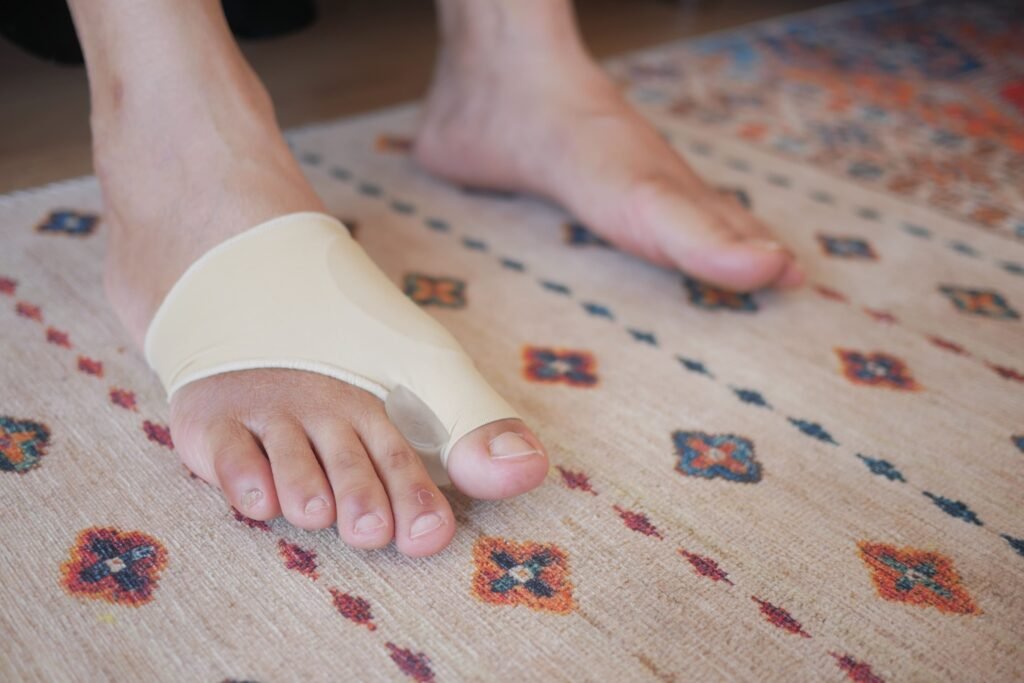
Bunion pads can sometimes help reduce rubbing between the bunion and the shoe.
However, they do not work for everyone. In some shoes, adding a pad can reduce the available space inside the shoe, which may actually increase pressure.
They are often most useful when worn with footwear that already has enough room.
Rest the Foot After a Long Day
If your bunion pain is worse after activity, resting the foot in the evening may help symptoms settle.
Elevating the foot and avoiding additional pressure around the bunion can reduce discomfort before bed.
When Should You See a Bunion Specialist?
You should consider seeing a foot and ankle specialist if:
- Your bunion pain regularly affects your sleep
- You have swelling, redness or throbbing around the big toe joint
- Pain returns every day after wearing shoes
- You are struggling to find comfortable footwear
- Your big toe joint feels stiff or painful to move
- Conservative treatments are no longer helping
- The bunion is affecting your walking, work or daily activities
Persistent nighttime pain is a sign that the bunion is not simply a cosmetic issue. It may be causing ongoing irritation, inflammation or joint problems that need proper assessment.
Enquire or book your consultation today: https://bunionsurgeon.co.uk/contact/
How Is Bunion Pain Investigated?
A specialist assessment usually involves examining the foot, checking the position of the big toe, assessing joint movement and reviewing how the bunion affects your walking and footwear.
X-rays are often recommended to assess:
- The severity of the bunion deformity
- The alignment of the big toe joint
- Whether there is arthritis in the joint
- Whether the pain is mainly from the bunion bump or the joint itself
- Which treatment options may be suitable
This helps create a treatment plan based on the cause of your pain, rather than treating the symptoms alone.
Can Minimally Invasive Bunion Surgery Help Night-Time Bunion Pain?
If conservative care is no longer controlling your symptoms, bunion surgery may be considered.
At Bunion Surgeon, Mr Kaser Nazir specialises in minimally invasive bunion surgery, also known as keyhole bunion surgery.
This approach is designed to correct the bunion deformity using smaller incisions, with the aim of reducing soft tissue disruption compared with traditional open surgery.
For suitable patients, minimally invasive bunion surgery can help correct the underlying bunion deformity, reduce pressure around the big toe joint and provide good long-term outcomes.
The right treatment depends on your examination, X-rays, symptoms and lifestyle goals.
Frequently Asked Questions About Bunion Pain at Night
Why does my bunion hurt more when I go to bed?
Bunion pain can feel worse at night because the joint and surrounding soft tissues have been irritated throughout the day.
Once you stop moving and are less distracted, the aching or throbbing may become more noticeable.
Can shoes cause bunion pain at night?
Yes. Tight, narrow, stiff or high-heeled shoes can place pressure on the bunion during the day.
This pressure can lead to inflammation and pain that becomes more obvious in the evening or at night.
Is nighttime bunion pain a sign that my bunion is getting worse?
Not always, but regular nighttime pain suggests that the bunion is causing ongoing irritation.
If the pain is persistent, worsening or affecting sleep, it is sensible to have the foot assessed by a specialist.
Can bunion pads stop nighttime pain?
Bunion pads may reduce rubbing in some cases, but they do not correct the bunion.
In tighter shoes, they may reduce space and make pressure worse. They work best when combined with roomy, comfortable footwear.
When should I consider bunion surgery?
Surgery may be considered when pain continues despite sensible footwear changes, insoles, padding, activity modification and other conservative measures.
X-rays and a specialist assessment are needed to decide whether surgery is appropriate.
Book a Bunion Consultation
If bunion pain is keeping you awake at night or affecting your daily life, it may be time to have your foot properly assessed.
Mr Kaser Nazir, Consultant Podiatric Surgeon, specialises in minimally invasive bunion surgery and can assess whether your symptoms are caused by bunion pressure, joint inflammation, arthritis or a combination of factors.
Book a consultation today to understand your options and find out whether minimally invasive bunion correction may be suitable for you.